Smart Investing: Buy Regrets, Sell Mistakes, Accumulate Conviction
Introduction: The Psychology of Market Cycles
Investing feels like a roller coaster. Prices go up and prices go down. Consequently, your emotions often follow the same path. Fear and greed dominate the minds of most participants. However, successful investors learn to control these feelings. They understand that market cycles are inevitable. Therefore, they prepare for every phase of the journey. Markets move from peaks to troughs over time. Investors often feel regret during deep crashes. They might also feel overconfident during long rallies.
Nevertheless, history shows that markets eventually recover. Understanding these cycles helps you stay calm. This blog post explores a simple yet effective strategy. It focuses on three core principles for different market states. First, we look at bear markets. Then, we examine bull markets. Finally, we discuss market corrections. Following a plan keeps you focused on long-term goals. Every investor needs a solid roadmap to navigate volatility. This guide provides exactly that.
Understanding investment emotional cycles
Markets often behave in predictable patterns. Usually, optimism leads to a state of euphoria. On the other hand, falling prices trigger widespread panic. These emotions often lead to poor decision-making. For instance, people buy when prices are high. Conversely, they sell when prices are low. This behavior destroys wealth over the long run. To avoid this, you must recognize your own biases. The cycle of market emotions is a well-documented phenomenon. You can find detailed charts on investor sentiment cycles at authoritative financial sites. Additionally, knowledge is your best weapon against panic. Understanding psychology is just as important as reading balance sheets. This awareness prevents you from following the herd blindly.
The importance of a rules-based framework
Discipline is the secret to lasting success while investing in stocks. Without a plan, you are a victim of the news. Instead, you should follow a clear set of rules. A rules-based framework removes the guesswork from trading. It helps you act rationally during times of stress. For example, knowing when to buy is crucial. Similarly, knowing when to exit from an investment is vital.
Smart investors use specific metrics to guide them. Specifically, they look at value, growth, and quality. Furthermore, they stick to their strategy regardless of the noise. Adhering to a system ensures consistency in your results. This approach builds confidence in your portfolio. Moreover, a good framework evolves with your experience. You become a better investor by following a process.
Investing in Bear Market: Buy Your Regrets
A bear market is often a time of great stress. Most people watch their portfolio values shrink rapidly. Consequently, panic selling becomes a common reaction. However, savvy investors view this differently. They see it as a rare opportunity. This is the time to acquire great businesses at low prices. Specifically, you should target the ones you missed earlier. Markets are cyclic by their very nature. Therefore, every crash eventually leads to a recovery. This section explains how to use these periods effectively. It is about turning fear into a strategic advantage.
The Second Chance for Missed Opportunities
During a bear market, fear dominates the headlines. Consequently, stock prices often drop significantly. This creates a unique window for investors. Specifically, you can buy stocks you previously missed. Perhaps you felt a stock was too expensive before. Now, the market offers a much lower entry point. Therefore, you should treat this as a second chance. Many great companies become affordable during these downturns. Historically, bear markets are temporary phases. Eventually, quality businesses recover and thrive. Buying your regrets means acting on past research. You already know these companies well. Thus, you can invest with high confidence. This strategy turns past hesitation into future gains. It is a proactive way to build wealth over time.
Identifying High-Quality Assets at a Discount
Not every falling stock is a bargain. In contrast, some companies deserve their low prices. Therefore, you must filter for true quality. Focus on firms with strong balance sheets. Specifically, look for high Return on Equity (ROE) and low debt. These metrics indicate a resilient business model. Additionally, seek out companies with sustainable competitive advantages. An asset-light model often performs better in tough times. Furthermore, verify the management’s track record. A discount is only valuable if the business is solid. By analyzing these factors, you avoid value traps. Quality assets usually lead the eventual market recovery. Consequently, your portfolio becomes much stronger. High-quality stocks at low prices are rare gifts.
The Discipline of Strategic Patience
Bear markets can last longer than expected. Therefore, do not rush to deploy all your capital. Instead, use a staggered buying approach. This method is often called rupee-cost averaging. It helps you manage the risk of further declines. Specifically, you buy in small increments over time. This requires a great deal of patience. Market bottoms are impossible to predict accurately. However, buying throughout the decline lowers your average cost. Moreover, stay focused on your long-term thesis. Avoid checking the portfolio every single hour. This reduces the urge to sell out of fear. Patience is the ultimate competitive advantage in investing. Eventually, the market cycle will turn upwards again. Strategic waiting pays off handsomely in the end.
Investing in Bull Market: Sell Your Mistakes
A bull market creates a feeling of invincibility. Usually, almost every stock in your portfolio turns green. However, this rising tide can hide significant fundamental weaknesses. Therefore, you must remain objective during these periods. It is the perfect time to clean your house. Specifically, you should exit positions that no longer fit your thesis. Many investors make the mistake of holding losers too long. In contrast, successful investors use liquidity to their advantage. They sell their mistakes when the market is optimistic. This ensures they have cash for better opportunities later.
Pruning the Portfolio During Market Euphoria
High market prices often mask poor business performance. Consequently, investors ignore red flags in their holdings. You should review every stock during a bull run. For instance, check if the original reason for buying still exists. If the business model has failed, sell the stock. Furthermore, do not wait for the price to go higher. Market euphoria provides the necessary liquidity for large exits. Therefore, take advantage of the high demand from other buyers. Pruning your portfolio keeps it healthy and focused. It removes the dead weight that slows down your growth. Eventually, every bull market comes to an end. Selling early protects your capital from the next crash.
Recognizing Fundamental Flaws in Winners
Sometimes, a stock price rises despite bad underlying metrics. This happens because momentum carries everything upward. However, a high price does not equal a good business. Specifically, look at the debt-to-equity ratio and cash flows. If the debt is rising while profits stall, be careful. Additionally, watch for management changes or declining market share. These are fundamental flaws that will eventually bite. Therefore, separate luck from actual business excellence. Sell the companies that are winning only because of the trend. This discipline prevents you from holding a shell when the music stops. Professional investors focus on quality over mere price action.
Capital Preservation and Rebalancing Logic
Protecting your gains is just as important as making them. Consequently, you should follow a strict rebalancing schedule. For example, if a sector grows too large, trim it. This locks in your profits for the long term. Moreover, it keeps your risk levels within your comfort zone. Capital preservation is the cornerstone of successful wealth management. Therefore, convert your paper gains into realized cash. You can then reinvest this money into safer assets. Alternatively, keep it ready for the next market correction. Discipline during a bull market saves you during a bear market. It is about being a seller when everyone else is buying.
Investing During Corrections: Accumulate Your Convictions
Market corrections are normal parts of a healthy cycle. However, they often cause unnecessary fear among retail investors. You must learn to ignore the daily noise. Instead, focus on the structural integrity of your companies. A price drop is not a reason to sell. In contrast, it is a reason to evaluate your thesis. Specifically, ask if the long-term prospects have changed. Usually, a 10% dip is just market volatility. Therefore, do not let short-term fluctuations dictate your actions. History shows that corrections are often buying opportunities. By staying calm, you avoid making emotional mistakes. Understanding the difference between noise and news is vital. This clarity allows you to hold your ground. Consequently, you remain positioned for the eventual recovery.
Distinguishing Market Noise from Structural Change
External events often drive short-term price movements. For instance, a global news can trigger a sudden sell-off. Usually, these events do not impact a company’s core value. Therefore, you should distinguish between price and value. Focus on whether the business is still generating cash. Additionally, check if the management is sticking to their plan. If the fundamentals are intact, ignore the chart. Market noise is temporary and often misleading. On the other hand, structural change is permanent and dangerous. For example, I encountered with a structural change in one of the core stocks in my portfolio, Dreamfolks Services Limited, without getting time to take a decision and quit.
A new competitor could disrupt the industry or an altogether change in the business model itself. Therefore, you must monitor the landscape for real threats. A correction is the best time to practice this discernment. You grow as an investor by staying rational during chaos.
The Power of Doubling Down on Research
Conviction comes from deep knowledge, not from charts. Therefore, use a correction to refine your analysis. Specifically, dive back into the annual reports and earnings calls. Verify that the company still meets your high standards. For example, check if the ROCE remains above your threshold. Additionally, look for any signs of competitive decay. If the business remains strong, your conviction should grow. Doubling down on research builds mental resilience. Consequently, you will not be shaken by temporary losses. Knowledge is the only antidote to market uncertainty. Furthermore, this process helps you identify the strongest survivors. These are the stocks that will lead the next rally. Genuine research separates the winners from the lucky.
Compounding Wealth Through Volatility
Volatility is a friend to the long-term investor. Usually, it allows you to lower your average cost. This is the time to accumulate your best ideas. Specifically, increase your weight in high-conviction stocks. This strategy significantly boosts your long-term compounding. Every share bought during a dip adds to your wealth. Moreover, corrections often shake out weak hands. Therefore, the remaining shareholders are more committed to the company. This creates a solid base for future growth. Use these moments to build a concentrated portfolio. Specifically, focus on your top five or ten picks. This focus maximizes your returns when the market turns. Markets eventually reward those who stay the course. Consequently, you should welcome corrections as wealth-building events.
Conclusion: Developing the Investor’s Mindset
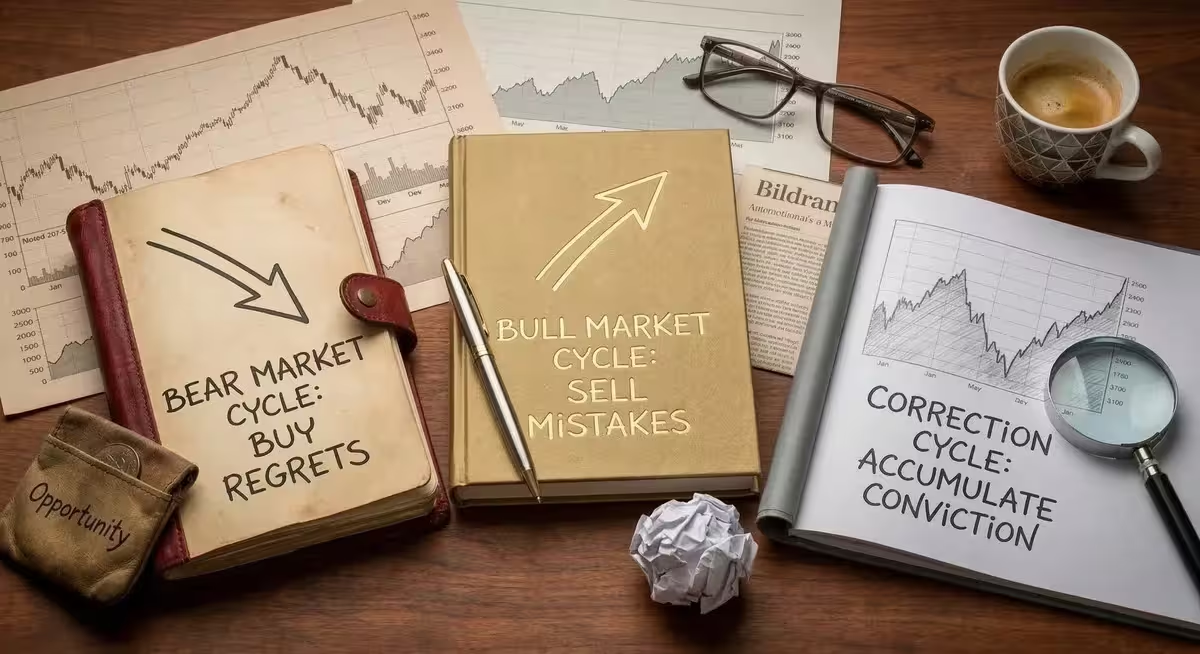
Successful investing requires a clear strategy for every market environment. Consequently, you must adapt your actions to the current cycle. In bear markets, you should buy your regrets. This means acquiring the quality stocks you previously missed. Furthermore, bull markets offer the chance to sell your investment mistakes. You should exit weak positions when liquidity is high. During market corrections, you must accumulate your convictions. Use price dips to increase your stake in great businesses. These three principles form a complete framework for wealth creation. Therefore, they protect you from emotional extremes. Following this roadmap ensures consistent progress over the years. Every market state becomes an opportunity for growth. Thus, you are never a victim of circumstances.
Summarizing the trifecta of market wisdom
The market is a cycle of opportunities and risks. Usually, investors focus only on the price action. However, the true value lies in the business fundamentals. You must remember to treat every phase as a tool. Specifically, use fear to buy and greed to sell. This approach goes against human nature. Nevertheless, it is the only way to beat the market averages. Your portfolio should reflect your long-term goals. Therefore, regular maintenance is essential for success. Pruning losers and adding to winners creates a robust engine for wealth. Moreover, staying disciplined prevents costly errors. Every decision must align with your established rules. This consistency leads to superior results over time.
Final thoughts on emotional mastery
Emotional mastery is the final piece of the puzzle. Most people fail because they cannot control their impulses. However, a disciplined mindset separates the elite from the average. You must stay objective when others are panicking. Similarly, stay cautious when the crowd is greedy. Developing this investing mindset takes time and practice. In fact, your character is more important than your IQ. Consistency is the primary driver of compounding. Consequently, focus on your process rather than daily price changes. Wealth is a marathon, not a sprint. Ultimately, your results will reflect your ability to stay calm. By mastering your emotions, you master the market. Continue learning and refining your approach every single day.
Did You Read The Disclaimer?
Not a SEBI-Registered Research Analyst or Investment Adviser
I am not a SEBI-registered Research Analyst or Investment Adviser. Raj & Co is an independent educational and informational website. All articles, views, opinions, observations, analyses and other content published on this website are provided solely for general informational and educational purposes.
Nothing published on this website constitutes investment advice, financial advice, research advice, a research report, a recommendation, solicitation, offer, endorsement or invitation to buy, sell, subscribe to, hold or otherwise deal in any security, financial product or investment strategy. The content is not tailored to any individual’s financial circumstances, investment objectives, risk tolerance or other personal circumstances.
Any discussion of a company, security, market, investment strategy, price, valuation, historical performance or other investment-related matter is intended solely for educational discussion and should not be interpreted as a recommendation or prediction of future performance. References to particular securities or investments do not constitute recommendations to buy, sell, or hold them.
I may personally buy, sell, hold or change my views or positions in securities at any time. Such personal transactions or changes in views do not constitute recommendations to readers. Where I disclose such positions or changes, the disclosure may occur after a transaction has been executed and may not be immediate.
Investment in the securities market is subject to market risks. Past performance is not indicative of future results. Readers should conduct their own independent research and due diligence and consider their own financial circumstances, investment objectives and risk tolerance before making any investment decision. If personalized financial advice is required, consult a financial adviser or other professional appropriately registered with SEBI.
No representation or warranty is made regarding the accuracy, completeness, timeliness or reliability of any information published on this website, and no responsibility is accepted for any loss arising from reliance upon such information to the extent permitted by applicable law.
SEBI’s investor education initiatives emphasize informed investing, financial literacy, risk awareness, and disciplined long-term wealth creation.
E & O E.