Tech Mahindra Investor: Hold or Sell in 2025? A Detailed Analysis
The story of my investment in Tech Mahindra is inseparable from one of the most dramatic episodes in Indian corporate history — the 2008 Satyam scandal. This scandal exposed deep financial manipulation by Satyam’s founder, shaking investor confidence and threatening to obliterate one of India’s top IT companies.
When the fraud surfaced, Satyam’s future was uncertain; market capitalization was decimated, and skepticism clouded the prospects of recovery. But amid this upheaval, the Indian government orchestrated a rescue plan through a transparent, government-supervised auction in April 2009.
It was Tech Mahindra, an established telecom IT services leader with a reputation for sound governance, that emerged as the successful bidder to acquire a controlling stake in Satyam. The acquisition represented both a profound challenge and a historic opportunity.
This was more than a rescue mission — it was a chance for Tech Mahindra to extend its industry leadership and restore trust in corporate governance. Seeing this potential, I began buying Satyam shares in March 2010, accumulating positions between ₹60/- and ₹102/-. I believed in Tech Mahindra’s strategic vision, operational capabilities, and Mahindra Group’s ethical standards to transform Satyam’s bruised reputation into a sustained growth story.
The decision to invest proved transformative. Under Tech Mahindra’s stewardship, Satyam stabilized, was respectfully rebranded as Mahindra Satyam, and finally merged in 2013 to form an expanded technology powerhouse that today forms nearly 44% of my investment portfolio. This journey underlines the power of disciplined conviction and the value of strategic corporate interventions.
In this post, I am trying to analyze in detail whether Tech Mahindra is still a hold or sell after 15 long years of owning it. An open note of my analysis and thoughts! Not a buy, sell, or hold recommendation for anyone else. It’s a post of more than 5500 words, and will need your patience to read in toto.
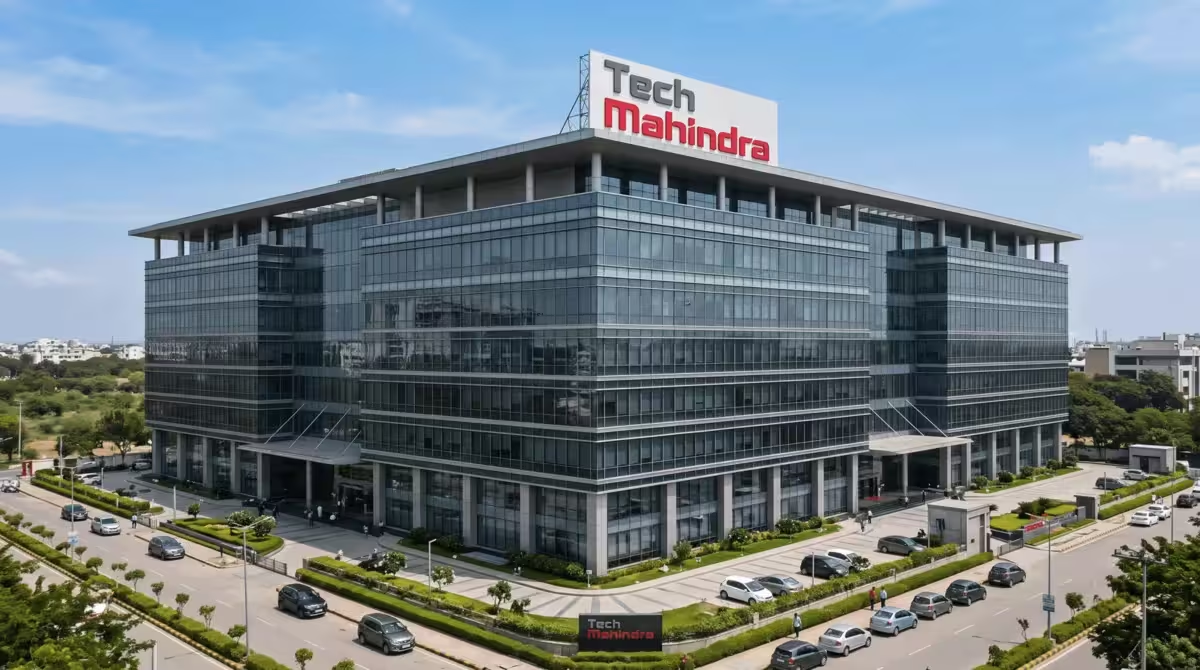
Company History and Evolution of Tech Mahindra: A Deep Dive
Tech Mahindra’s origin in 1986 as a joint venture between Mahindra & Mahindra and British Telecom (BT) set the tone for its telecom-focused IT services specialization. Initially focused on servicing BT’s global telecom IT needs, the company steadily expanded technologically and geographically over the next two decades.
By 2006, rebranded as Tech Mahindra Limited, the company went public, signaling its ambitions beyond telecom and its increasing maturity as a technology services provider.
The transformational acquisition of Satyam Computer Services in 2009 amid scandal doubled Tech Mahindra’s scale and diversified its offerings beyond telecom. The government-supervised bidding was a critical process that allowed Tech Mahindra to take control of a firm embroiled in crisis but rich in global client relationships and technology expertise.
Following the acquisition, a rebranding to Mahindra Satyam helped distance the company from past controversies while signaling a fresh start under Mahindra Group’s esteemed leadership. By June 2013, Tech Mahindra completed the full merger after necessary approvals, creating India’s fifth-largest IT services firm, boasting $2.63 billion in revenues.
Subsequent strategic acquisitions such as Hutchison Global Services, Comviva, Pininfarina, and various digital and consulting firms expanded its sectoral and technological footprint. Acquisition of Hutchison Global Services expanded global telecom services; Comviva enhanced mobile financial services capabilities; and Italian design house Pininfarina diversified brand offerings, illustrating a bold diversification and innovation drive.
Tech Mahindra’s strong emphasis on AI, cloud, IoT, digital consulting, and innovation initiatives reflect a future-ready stance, and mark it as a forward-looking technology leader, blending tradition with innovation.
These fundamental shifts highlight Tech Mahindra’s resilience and strategic vision, key reasons for my investment conviction and holding thus far.
Sectoral Leadership and Market Positioning: Why Tech Mahindra Remains a Core Holding for Me
Telecom: The Backbone of Tech Mahindra’s Revenue
Telecommunications remains Tech Mahindra’s largest segment, contributing around 40% to its revenue. Over the years, the company has carved out a leadership position by providing comprehensive telecom services including network infrastructure management, system integration, and value-added services. I see this vertical as both a stable and evolving foundation of the business, driven by the global rollout of 5G technologies and network modernizations.
Tech Mahindra has extensive partnerships with major global telecom providers like Vodafone Idea, Telefonica, and Deutsche Telekom, enabling it to maintain multi-year contracts with predictable revenues. Their investment in next-generation technologies like 5G Core, network slicing, and automation keeps the company competitive in this segment.
BFSI: Diversifying and Growing Revenue Streams
Banking, Financial Services, and Insurance (BFSI) represent the second-largest segment, about 22% of revenue. Tech Mahindra has been expanding its footprint in core banking modernization, digital banking platforms, risk management, and regulatory compliance. This vertical provides diversity beyond telecom and shields the business from telecom-sector cyclicality.
I find the BFSI segment appealing due to increasing digital transformation mandates amongst banks and insurers globally, a trend accelerated by regulatory reforms and changing customer expectations. Tech Mahindra’s acquisitions and partnerships have enabled it to offer innovative cloud-native solutions, boosting competitive differentiation (Screener.in).
(The data from Smart Investing is erring with financial years messed up. So I am trying to pull more accurate data from wherever possible, mainly from Tech Mahindra annual reports and filings. E&OE.)
Digital and Emerging Technologies: Stepping Ahead in Innovation
A key reason I hold Tech Mahindra steadfastly is its aggressive push into digital technologies. These include:
- Artificial Intelligence and Machine Learning
- Cloud computing and hybrid cloud solutions
- Internet of Things (IoT) deployments
- Automation and robotic process automation (RPA)
- Blockchain applications in supply chain and finance
More than 50% of Tech Mahindra’s revenue now comes from digital and emerging technology services: AI, cloud migration, automation, blockchain, and cybersecurity solutions. These services are nurtured through robust innovation labs that incubate advanced capabilities offered to a global client base of over 1,100 customers, including numerous Fortune 500 companies. The company’s Makers Lab collaborates with startups and academics worldwide fostering innovation pipelines. This forward-looking strategy gives me confidence that Tech Mahindra is positioned well for future growth in a rapidly evolving technology landscape (Tech Mahindra Makers Lab).
Geographic Diversification and Client Base
Tech Mahindra operates in over 90 countries, with significant client presence in North America, Europe, India, and emerging markets such as Africa and Southeast Asia. While North America drives ~40% of revenues, Europe and India contribute approximately 30% and 20% respectively.
As I said above, the company serves over 1100 clients including Fortune 500 companies, a mix I appreciate for mitigating customer concentration risk. However, telecom and BFSI sectors dominate the client mix, which calls for vigilance about sector-specific downturns.
Competition and Market Dynamics
Tech Mahindra competes with global IT services leaders like Tata Consultancy Services (TCS), Infosys, Wipro, and Cognizant. While these giants have scale advantages, Tech Mahindra leverages nimbleness, telecom specialization, and diversified service lines. In a competitive landscape featuring giants like TCS, Infosys, and specialized telecom vendors, Tech Mahindra’s blend of telecom heritage and digital innovation proffers unique competitive advantages and positions it strongly for future market consolidation.
In telecom, rivals such as Ericsson and Nokia specialize in network hardware and managed services but do not offer the IT breadth Tech Mahindra provides. Meanwhile, newer digital entrants and consultancies add competitive pressure in cloud and AI services.
Summary: Balanced Sectoral Strengths Underpin Tech Mahindra Investment Confidence
Overall, Tech Mahindra’s strong leadership in telecom, along with the steady growth of its BFSI vertical and ongoing innovation in digital transformation services, provides a balanced foundation for my long-term investment thesis. Furthermore, the company’s strategic diversification across sectors and global geographies adds resilience and reduces reliance on any single market. At the same time, I remain mindful of cyclical industry headwinds that often impact long-term IT stocks in India. Nevertheless, Tech Mahindra’s proven ability to adapt, invest in next-generation technologies, and sustain strong client relationships strengthens my conviction in its future growth. Ultimately, I view Tech Mahindra as a stable yet forward-looking IT player, capable of delivering sustainable shareholder value and reinforcing its place as a core holding in my portfolio.
Financial Performance of Tech Mahindra: An In-Depth Analysis
Historical Financial Performance: The Growth Story from 2010 to 2025
Tech Mahindra’s financial evolution from 2010 to 2025 reflects a compelling story of growth and transformation within India’s IT sector.
- Revenue Growth: In 2010, Tech Mahindra’s consolidated revenue was approximately ₹7,000-8,000 crore. Over the next 15 years, this figure swelled to ₹52,988 crore in FY25. This reflects a compounded annual growth rate (CAGR) of around 12-13%, well above many peers and a solid performance considering industry cycles.
- Profitability Improvement: Profit after tax (PAT) grew from a few hundred crores in 2010 to ₹4,252 crore in FY25, demonstrating a CAGR of roughly 20% in net profits, thanks largely to operational efficiency and better business mix.
Tech Mahindra EBIT Margin (FY10-FY25, Q1FY26)
| Fiscal Year | EBIT Margin (%) |
| 2025-26 | 11.1 (Q1) |
| 2024-25 | 9.7 |
| 2023-24 | 8.6 |
| 2022-23 | 14.6 |
| 2021-22 | 17.9 |
| 2020-21 | 18.0 |
| 2019-20 | 14.9 |
| 2018-19 | 18.2 |
| 2017-18 | 16.6 |
| 2016-17 | 15.6 |
| 2015-16 | 16.3 |
| 2014-15 | 18.3 |
| 2013-14 | 22.2 |
| 2012-13 | 21.4 |
| 2011-12 | 16.7 |
| 2010-11 | 12.0 |
| 2009-10 | 24.5 |
Source: Tech Mahindra annual reports
- Margin Trend: Tech Mahindra’s EBIT margin in FY10 stood at 12%. Margins peaked at 24.5% in FY09-10 and 22.2% in FY13-14, then saw significant volatility, declining as low as 8.6% in FY24. As of FY25, EBIT margin contracted to 9.7%, with Q1 FY26 at 11.1%. This pattern reflects a business adapting through cycles—experiencing both periods of expansion and compression—as it navigated industry shifts and operational challenges.
- Earnings Per Share (EPS): The EPS surged from roughly ₹2.02 in 2010 to ₹47.91 in FY25, rewarding shareholders who held on through various market cycles.
- Operational Metrics:
Over the years, Tech Mahindra enhanced offshore revenue percentage, improved employee utilization rates, and reduced dependence on low-margin clients, driving sustainable profitability.
From an investor’s viewpoint, these figures represent consistent wealth creation powered by organic growth and smart operational tactics.
Revenue and Growth Trends
From fiscal year 2020 onwards, Tech Mahindra’s revenues have shown growth but with some recent headwinds. The consolidated operating income figures in ₹ crore are:
- FY20: ₹36,868
- FY21: ₹37,855 (+2.7% YoY growth)
- FY22: ₹44,646 (+17.9% YoY growth)
- FY23: ₹53,290 (+19.4% YoY growth)
- FY24: ₹51,996 (-2.4% YoY contraction)
- FY25: ₹52,988 (+1.9% YoY growth)
The five-year CAGR for revenues stands at approximately 9.8%, reflecting a solid top-line expansion despite the slight dip in FY24 possibly linked to macroeconomic pressures and client-side delays (Screener.in financials).
Profitability and Margins
Operating profit (PBIT) has been more volatile:
- FY20: ₹5,503 crore
- FY21: ₹6,796 crore (+23.5% YoY)
- FY22: ₹8,020 crore (+18% YoY)
- FY23: ₹7,763 crore (-3.2% YoY)
- FY24: ₹4,506 crore (-41.9% YoY)
- FY25: ₹6,964 crore (+54.5% YoY)
Tech Mahindra’s operating margins dropped from a high of 18.0% in FY22 to a low of 8.7% in FY24, before rebounding to 13.1% in FY25. This fluctuation is attributable to increased costs, wage hikes, and pricing pressures, followed by the positive impact of strategic cost optimization and business initiatives. (Screener.in financials).
Net Profit after tax also reflects this volatility:
- FY20: ₹4,033 crore
- FY21: ₹4,428 crore (+9.8%)
- FY22: ₹5,630 crore (+27.1%)
- FY23: ₹4,857 crore (-13.7%)
- FY24: ₹2,397 crore (-50.6%)
- FY25: ₹4,252 crore (+77.4%)
The severe drop in FY24 PAT is a key concern, underlining margin challenges and increased expenses (Tech Mahindra annual reports and filings).
Earnings per share (EPS) have fluctuated significantly with:
- FY20: ₹40.4
- FY21: ₹47.9
- FY22: ₹57.9
- FY23: ₹48.9
- FY24: ₹26.6
- FY25: ₹47.9
Return on Capital Employed (ROCE) and Return on Equity (ROE) show a similar pattern of profitability fluctuation but have improved in FY25 compared to FY24:
- ROE FY25: 15.9% vs 9.1% FY24
- ROCE FY25: 22.0% vs 13.7% FY24
These recovery signs are encouraging but need sustained improvement to restore investor confidence (Tech Mahindra annual reports and filings).
Tech Mahindra Balance Sheet Strength and Liquidity
Tech Mahindra maintains one of the most conservative balance sheets in the Indian IT sector, with a Debt-to-Equity ratio of just 0.02x in FY25. In addition, the company reported a cash and cash equivalents of ₹8,072 crore as per its Q1FY26 results, underscoring its strong liquidity position.
This robust financial foundation not only provides resilience during market downturns but also enables strategic investments in digital innovation, selective acquisitions, and consistent shareholder returns. As a result, Tech Mahindra’s balance sheet strength reinforces its ability to pursue growth opportunities while maintaining financial stability.
Tech Mahindra Dividend Policy and Growth Trends
An important consideration for long-term holders is the company’s dividend policy and total shareholder returns (TSR), which includes share price appreciation plus dividend income. Tech Mahindra has demonstrated a consistent commitment to rewarding shareholders with dividends that have generally grown over the past decade. Here are some key highlights and trends:
Dividend Payouts: For FY25, Tech Mahindra declared a final dividend of ₹30 per share, along with an interim dividend of ₹15 per share, bringing the total dividend payout to ₹45 per share. This ₹45 total dividend equates to 900% of the ₹5 face value of the share, indicating a strong cash return to shareholders. The dividend payout reflects consistent year-over-year growth, with previous years including:
- FY24: ₹40 per share (₹28 final + ₹12 interim)
- FY23: ₹50 per share (₹32 final + ₹18 special)
Historical data shows increasing dividends, albeit with some special dividends in certain years reflecting exceptional cash positions.
Dividend Growth: Since 2010, Tech Mahindra has consistently raised dividends, reflecting stable cash flow generation. The FY25 final dividend of ₹30 per share highlights management’s commitment to rewarding shareholders.
Dividend Yield: The current dividend yield based on recent share prices is approximately 2.7 – 3.0%, which is moderate and competitive within the IT sector. This yield balances income with retained earnings for growth investments.
Payout Ratios: Tech Mahindra often returns a large portion of its net profits — often in the ~80-100% range — to shareholders via dividends (and sometimes buybacks). Its free cash flow is healthy, which supports the sustainability of these payouts, though high payout levels leave less cushion if cash flows weaken.
Dividend Stability: Despite occasional variations due to special dividends, the company has maintained an upward trajectory in dividend payments for the past decade, reflecting robust cash flows and management focus on shareholder rewards.
Share Buybacks: Selective buyback programs have further enhanced shareholder wealth by returning excess cash.
Total shareholder return (TSR), which combines dividends and stock price appreciation, has been significant for long-term investors. A Tech Mahindra shareholder since 2010, particularly those who invested during the Satyam merger phase, has likely achieved multi-bagger returns that outperformed many traditional asset classes.
Impact for Long-Term Holders: Dividends contribute an important component of TSR alongside capital gains. For shareholders who have held since pre-merger Satyam days, cumulative dividend income adds substantial value to their total wealth creation.
Strong Cash Flow Support: Tech Mahindra’s dividend has grown impressively from ₹18 per share a decade ago to ₹45 per share recently, underscoring robust cash flow generation and commitment to shareholder wealth.
Investment Thesis: Dividend growth stability and disciplined capital allocation underpin Tech Mahindra’s ability to generate sustainable long-term returns, making it attractive for investors seeking growth complemented by income.
Strong cash flows support a dividend yield competitive within the sector. The company’s dividend has grown impressively from ₹18 per share a decade ago to ₹45 per share recently, reflecting robust cash flow and commitment to shareholder wealth. The dividend yield currently stands competitive within the IT sector (Moneycontrol Dividend History). The dividend growth and payout ratio demonstrate management’s commitment to shareholder returns, an important consideration for my investment decision framework.
The steady, growing dividend history complements Tech Mahindra’s growth narrative and adds a reliable income stream, reinforcing its position as a quality long-term investment.
Recent Quarterly Performance Snapshot
In Q1 FY26, Tech Mahindra reported:
- Revenue of ₹13,351 crore (+2.7% YoY)
- EBIT of ₹1,477 crore (+34% YoY)
- PAT at ₹1,141 crore (+34%)
- Diluted EPS of ₹12.86
- Headcount at approx 148,517 employees
- Cash and cash equivalents of approx ₹8,072 crore
CEO Mohit Joshi highlighted strong deal wins (up 44%) and broad-based momentum across verticals and geographies, which bode well for future quarters.
Recent Financial Highlights: FY25 and Q1 FY26 Performance in Detail
Tech Mahindra’s latest annual and quarterly financial results underscore its turnaround story and growth momentum.
- Revenue:
FY25 consolidated revenue stood at ₹52,988 crore, marking modest but steady growth amid global IT spending pressures. Q1FY26 revenue reached ₹13,569 crore, a -0.2% sequential contraction and a 2.6% year-on-year growth. - Profitability:
Profit after tax (PAT) rose 34% YoY in Q1FY26, reaching ₹1,141 crore, compared to ₹851 crore in Q1FY25. For FY25 as a whole, PAT was ₹4,252 crore, reflecting solid growth over the previous year. EBIT margin for FY25 stood at 9.7%, while Q1FY26 margin was 11.1%, indicating a slight decline sequentially but demonstrating resiliency in core operational performance. - Earnings Per Share:
Diluted EPS for FY25 was ₹47.91, with Q1FY26 EPS jumping to ₹12.86, reflecting strong bottom-line growth. - Cash Flow:
Free cash flow remained healthy, with ₹150 million USD reported at Q4FY25, demonstrating good cash generation supporting dividends and investments. - New Deal Wins:
New deal wins in Q1FY26 of USD 809 million represented a 51% YoY jump, vital for future revenue visibility. - Balance Sheet and Debt:
Tech Mahindra sustained a comfortable leverage profile, supporting strategic investments and shareholder returns.
These results highlight operational excellence and strong execution of margin expansion programs like Project Fortius.
Summary of Financial Insights
Tech Mahindra’s financial story therefore reflects a nuanced blend of growth opportunities and tactical challenges, yet it remains underpinned by a solid foundation and forward-looking investments. Specifically, performance analysis highlights strong historical revenue growth from approximately $2.63 billion in 2013 to $6.26 billion by FY2025, and a healthy cash flow generation. However, profitability has faced headwinds, with margin pressures and earnings volatility weighing on near-term performance. For instance, margin compression has resulted from increased investments in digital innovation, higher talent acquisition costs, and geopolitical uncertainties that have elevated operational expenses.
As a result, net profits declined from ₹4,832 crore in FY2023 to ₹2,358 crore in FY2025, underscoring the impact of these challenges. Nevertheless, recovery in recent quarters and ongoing cost optimization initiatives could help restore profitability levels. Most notably, Q1FY26 results showed a 34% surge in net profit, supported by a strong deal win pipeline and operational efficiencies, thereby signaling a revival of growth momentum.
In contrast to these short-term pressures, Tech Mahindra’s balance sheet remains resilient, with low debt and cash and cash equivalents of nearly ₹8,072 crore. This strong financial position not only provides a cushion against market volatility but also enables the company to fund strategic investments and shareholder returns.
From an investor perspective, monitoring upcoming quarterly results, margin trends, and cost efficiency measures will be essential before considering any action as regards to my holdings in Tech Mahindra.
Risk Assessment and Concentration Management: Why I Stay Vigilant with My Tech Mahindra Investment
Business and Financial Risks
Despite the growth story and robust business fundamentals, Tech Mahindra faces a range of risks I constantly evaluate:
- Revenue and Profit Volatility: Recent financials show dips in PAT and shrinking operating margins due to wage hikes, pricing pressures, and supply chain disruptions. (Screener.in) As I hold a significant position, persistent earnings volatility makes me cautious.
- Customer Concentration: Tech Mahindra derives nearly 60% of revenues from telecom and BFSI sectors. While these segments are sizeable, sector-specific downturns or telecom capex cuts could materially impact growth. I monitor client diversification efforts and contract renewals closely.
- Macroeconomic and Geopolitical Risks: With over 90 countries exposure, Tech Mahindra is vulnerable to currency fluctuations, trade tensions, immigration or visa regulation changes, and geopolitical instability. These external factors can affect delivery models and cost structures.
- Regulatory and Compliance Risks: The company must navigate complex and varying regulations globally, including data privacy laws (GDPR, CCPA), industry-specific compliance, and IT outsourcing regulations. Non-compliance can expose Tech Mahindra to fines and reputational harm (Tech Mahindra Legal Risk Management).
ESG and Sustainability Risks
Tech Mahindra scores well in ESG risk management, ranked 13 (low risk) among 936 global software & services firms as per Sustainalytics (Sustainalytics ESG Report). However, in my view:
- Scope 1 and Scope 2 GHG emissions (totaling ~89,000 MTCO2e in FY 24-25) require ongoing reduction efforts to align with global net-zero goals (Tech Mahindra GHG Assurance 2024-25).
- Supply chain sustainability and vendor compliance demand constant vigilance amid evolving regulations and climate risks (Tech Mahindra Sustainable Supply Chain).
Their ongoing inclusion in the FTSE4Good Index for the ninth consecutive year boosts my confidence in their ESG leadership and risk mitigation (FTSE4Good Recognition).
Portfolio Concentration Risk
With nearly 44% of my portfolio concentrated in Tech Mahindra shares, I face amplified company-specific risk. This concentration exposes me to:
- Stock price volatility on company or sector news
- Potential material downside should the company face sustained financial or operational challenges
- Sector downturn impacts, especially in key telecom and BFSI verticals
To mitigate this, I emphasize:
- Regular portfolio review and rebalancing by trimming significant positions gradually
- Diversification across sectors and asset classes to reduce systemic risk
- Setting valuation or fundamental triggers for partial exits or reallocation
- Continual monitoring of regulatory, geopolitical, and macroeconomic developments
Other Risks and Contingencies
- Technological Disruption: Rapid innovation in cloud, AI, and digital services requires constant reinvestment. Falling behind could affect competitiveness.
- Talent Retention: As a labor-intensive business, losing key talent or failing to recruit skilled professionals can hamper execution.
- Currency Fluctuations: Operating globally, the company’s profitability is sensitive to exchange rate movements.
Summary: Vigilant Risk Management Guides My Tech Mahindra Holding
Despite Tech Mahindra’s strong business model and attractive growth potential, I remain prudent due to exposure to operational, financial, macroeconomic, and portfolio concentration risks. Accordingly, my approach balances conviction with caution: I maintain a significant stake without increasing it, carefully manage portfolio concentration, and continuously monitor risks and fundamentals. By doing so, I can adapt my investment strategy as market conditions and company performance evolve, ensuring a disciplined and risk-aware approach to long-term wealth creation.
Valuation Analysis and Investment Decision Framework
Valuation Analysis: Historical vs. Present
Analyzing Tech Mahindra’s valuation from a long-term perspective is critical for shareholders evaluating whether to hold or sell today.
- Historical Valuation Trends:
At the time of the Satyam-Tech Mahindra merger in 2013, the stock traded at P/E multiples generally around 12x. This reflected its then-intermediate growth profile and rebuilding phase post-merger. - Current Valuation (2025):
Today, Tech Mahindra’s P/E ratio is approximately 33x, and the Price-to-Book ratio is about 5.03x, indicating a significant premium has been priced in. The company’s return on equity (ROE) hovering near 18% over the long term warrants this premium to some extent, as does the sustained margin expansion and visible growth in high-value digital services. - Intrinsic Valuation Considerations:
Using discounted cash flow (DCF) models based on management’s growth guidance and margin targets, Tech Mahindra’s intrinsic value suggests a valuation range close to the current market levels. However, this assumes successful and uninterrupted execution of strategy amid global uncertainties, making the investment moderately valued. - Peer Comparison:
Compared to peers like Infosys and HCL Technologies, Tech Mahindra commands a valuation premium relative to its size but offers comparable growth prospects. Its telecom specialization grants it differentiated upside, though also concentrated risk.
Current Valuation Multiples
(I started writing this blog post on September 15, 2025, and finished on September 20, 2025. The data could have slight variations between these two dates and between the sources.)
So, as of September 15, 2025, Tech Mahindra’s stock trades at a premium valuation reflecting investor expectations of growth and digital transformation leadership. Key multiples include (Smart Investing, Stock Analysis and Tech Mahindra Q4FY25 results.):
| Metric | Value | Notes |
|---|---|---|
| Price-to-Earnings (P/E) | ~33x trailing | Based on trailing twelve months’ earnings |
| Price-to-Book (P/B) | ~5.03x | Book value approx ₹30,247 crore |
| Price-to-Sales (P/S) | ~2.87x | Reflecting revenue of about ₹52,988 crore |
| EV/EBITDA | ~20.9x | Enterprise value approx ₹1.46 trillion |
| EV/Revenue | ~2.76x | |
| PEG Ratio | 1.16 | Indicates price relative to earnings growth |
These valuations indicate a premium relative to many Indian IT peers, justified by expected growth, digital initiatives, and strategic acquisitions. In summary, while Tech Mahindra has transitioned from undervalued to fairly or slightly overvalued territory, the premium valuation aligns with its evolved stature and growth ambitions.
Peer Benchmarking
Here is a peer benchmarking table comparing Tech Mahindra with major Indian IT companies like TCS, Infosys, Wipro, and HCL Technologies based on their market cap, revenue, profitability, valuation ratios, margins, returns, dividend yield, and recent growth: (Screener.in financials as on September 19, 2025 and Tech Mahindra Q4FY25 results.)
| Company | Market Cap (₹Cr) | Revenue (₹Cr) | PAT (₹Cr) | P/E Ratio | P/B Ratio | EBIT Margin (%) | ROE (%) | Dividend Yield (%) | 1 Year Revenue Growth (%) | 1 Year PAT Growth (%) |
|---|---|---|---|---|---|---|---|---|---|---|
| Tech Mahindra | 1,52,204 | 52,988 | 4,252 | 33.6 | 5.03 | 9.7 | 15.9 | 2.9 | 1.97 | 80.3 |
| TCS | 11,46,644 | 2,56,148 | 49,511 | 23.26 | 12.1 | 26.7 | 50.95 | 3.69 | 1.3 | 5.9 |
| Infosys | 6,39,859 | 1,65,954 | 27,300 | 23.44 | 6.75 | 25.3 | 27.94 | 2.4 | 7.12 | 13.8 |
| Wipro | 2,68,254 | 89,259 | 13,483 | 19.91 | 3.29 | 22.9 | 17.15 | 4.3 | 0.78 | 11.0 |
| HCL Technologies | 3,98,203 | 1,21,347 | 16,976 | 23.44 | 6.6 | 19.9 | 23.7 | 3.27 | 8.17 | 11.7 |
Key Observations:
- Tech Mahindra is smaller in market cap and revenue compared to TCS and Infosys; however, it has demonstrated stronger recent profit growth, with a 34% YoY PAT increase.
- At the same time, its valuation multiples (P/E 33.6x, P/B 5.03x) are on the higher side relative to peers, thus reflecting market expectations for continued growth and margin expansion.
- Furthermore, the EBIT margin and ROE are lower than the peers. Consequently, margin expansion has emerged as a key focus area for the company.
- In addition, the dividend yield of 2.7 – 3.0% is moderate, thereby offering a balance between growth and income for investors.
- Finally, although revenue growth is modest at 1.97% compared to peers, PAT growth remains robust, which in turn highlights the benefits of ongoing operational improvements.
Therefore, peer benchmarking underscores Tech Mahindra’s positioning as a mid-sized but steadily growing IT player with strong profit momentum. However, given its premium trading multiples, the company must consistently deliver sustained execution to justify its valuation.
Intrinsic Value and Analyst Estimates
Using a combination of discounted cash flow (DCF) models, peer comparisons, and dividend discount models, analysts estimate Tech Mahindra’s intrinsic value at around ₹1,168 per share (Sep 2025 estimate) (Smart Investing Intrinsic Value).
Given the approximate stock price of ₹1,554. (Trading View Price Charts and Technical Analysis), the current market price trades at roughly a 33% premium over intrinsic value suggesting:
- Market optimism on future growth and margin recovery
- Potential expectation of new deal wins and digital transformation tailwinds
Growth and Return Expectations
Latest company data indicates modest revenue growth (~3% LTM), EBITDA margin near 13.2%, and improving profitability metrics. Return on Invested Capital (ROIC) stands around 16%, implying efficient capital use.
However, recent volatility in earnings and margins means sustained growth execution will be key to justifying and sustaining the premium multiples (Stock Analysis).
My Investment Decision Framework Specific to Tech Mahindra
Given the valuation and operational context, here are the key criteria I use to decide on my position management:
- Continue Holding If:
- PAT growth remains at least 15-20% CAGR over next 3-5 years
- Margins stabilize or expand driven by cost efficiencies and pricing power
- Revenue growth sustains digital and telecom client wins
- Valuation stays in a justified premium range (P/E under 35x, EV/EBITDA below 18x)
- Consider Trimming/Selling If:
- Earnings growth disappoints consistently and margins deteriorate
- Valuation multiples spike well beyond intrinsic value premiums without growth support
- Regime shifts in telecom or BFSI sectors reduce addressable market or spending
- My portfolio concentration risk rises beyond my comfort level
Summary and Strategic Positioning
Tech Mahindra’s current valuation reflects a confident market stance on its growth trajectory, digital transformation leadership, and strong client relationships. However, the elevated multiples and earnings volatility therefore necessitate disciplined monitoring.
In addition, my large existing stake, combined with valuation premiums, further reinforces a cautious “hold and monitor” posture. Accordingly, I focus on margin recovery, deal traction, and revenue growth signals before considering any decisive action. Moreover, I plan measured trimming if valuations spike or fundamentals weaken, thereby maintaining a balanced and risk-aware strategy.
Personal Investment Narrative and Conclusion: Managing a High-Conviction Stake in Tech Mahindra
As a long-term investor holding nearly 44% of my portfolio in Tech Mahindra shares, I have developed a deeply personal and disciplined approach to managing this significant concentration. This is not a decision taken lightly but the result of years of research, experience, and conviction balanced by cautious risk management.
The Journey of Conviction
My journey began during Tech Mahindra’s evolution in the telecom sector, but a key moment of conviction came after the exposure of the 2008 Satyam scandal. Recognizing the turmoil and opportunity, I purchased Satyam shares post-scandal, following the announcement that Tech Mahindra would take over and lead the turnaround.
The acquisition of Satyam was a turning point that significantly bolstered scale, capabilities, and market presence. This strategic move proved pivotal as Tech Mahindra successfully integrated Satyam, transforming it into a diversified, global IT powerhouse. I have since followed the company’s growth trajectory closely, building my conviction grounded in its resilience, strategic acquisitions, and digital innovation.
Subsequent strategic acquisitions and consistent innovation reinforced my confidence. Being invested so heavily, I have closely followed quarterly results, management commentary, and sector trends.
Balancing Conviction with Concentration Risk
While I believe in Tech Mahindra’s long-term growth story and strategic positioning, I am acutely aware of the risks inherent in such concentrated exposure. Earnings volatility, margin pressures, sector cyclicality, and external macro risks necessitate a very active and patient management style.
Because my core holding is so large, I do not intend to increase it any further. Instead, I focus on:
- Rigorous Monitoring: Tracking financial performance, margin trends, sector outlooks, and valuation metrics every quarter.
- Defined Triggers: Setting clear rules to trim portions if valuation exceeds intrinsic value by sizable margins or if fundamentals deteriorate persistently.
- Portfolio Diversification: Rebalancing other parts of my portfolio to offset concentration and maintain risk limits in line with my financial goals and risk tolerance..
- Emotional Discipline: Avoiding impulsive decisions during market volatility by sticking to my investment framework based on facts and fundamentals.
Lessons from Tech Mahindra Reflecting Broader Investment Principles
This investment exemplifies several universal lessons I share for thoughtful equity investing:
- Know Your Company Deeply: Comprehensive understanding of business models, competitive advantages, financials, and risks is essential before conviction.
- Stay Vigilant About Risks: Even high-conviction holdings require active risk assessment and management.
- Diversification Is Valuable: Concentration benefits must be balanced with diversified exposure to preserve capital.
- Valuation Matters: Buying or holding at reasonable valuations reduces downside risk and improves long-term returns.
- Patience and Long-Term View: Great investments mature over years; short-term volatility is often noise.
Final Thoughts on Tech Mahindra Investment Position
In summary, Tech Mahindra is my highest conviction share due to its strong fundamentals, strategic position, and digital innovation momentum. However, the associated risks and my high portfolio concentration require a prudent and structured approach.
Moreover, my investment in Tech Mahindra is deeply personal, born from an intimate understanding of its strategic turnaround following the Satyam scandal. This, in turn, underscored the importance of integrity, leadership, and governance in shaping investment outcomes.
Although confidence in the company’s long-term prospects is strong, the significant portfolio concentration nevertheless compels disciplined risk management. Therefore, consistent monitoring, valuation discipline, and diversification are key to balancing conviction with caution.
Balancing Conviction with Risk Management
Consequently, by balancing enthusiasm with caution, applying clear valuation and risk criteria, and complementing this core holding with diversified assets, I aim to achieve long-term wealth creation while limiting downside exposure.
At the same time, this ongoing investment journey requires discipline, continuous learning, and adaptability to evolving market and company dynamics. Indeed, mastering such nuanced judgment is critical for anyone seeking to build enduring wealth in dynamic equity markets.
Ultimately, Tech Mahindra remains a core holding representing resilience, strategic vision, and growth potential. Yet, I prioritize safeguarding capital and portfolio balance over increasing exposure—lessons etched through years of investing experience.
Read The Disclosure:
Invested. Holding.
This is an open note evaluating and writing down the reasons that encouraged me to buy/hold Tech Mahindra shares. Such notes help me come back anytime and look if anything has changed adversely contrary to my views and thesis at the time of buying or while writing this note.
I own the shares of the company. So my views will be definitely biased. I welcome contravening views as well to overcome my bias. Rather if this post helps you in getting educated to research a stock, I will be more than happy.
Did You Read The Disclaimer?
Not a SEBI-Registered Research Analyst or Investment Adviser
I am not a SEBI-registered Research Analyst or Investment Adviser. Raj & Co is an independent educational and informational website. All articles, views, opinions, observations, analyses and other content published on this website are provided solely for general informational and educational purposes.
Nothing published on this website constitutes investment advice, financial advice, research advice, a research report, a recommendation, solicitation, offer, endorsement or invitation to buy, sell, subscribe to, hold or otherwise deal in any security, financial product or investment strategy. The content is not tailored to any individual’s financial circumstances, investment objectives, risk tolerance or other personal circumstances.
Any discussion of a company, security, market, investment strategy, price, valuation, historical performance or other investment-related matter is intended solely for educational discussion and should not be interpreted as a recommendation or prediction of future performance. References to particular securities or investments do not constitute recommendations to buy, sell, or hold them.
I may personally buy, sell, hold or change my views or positions in securities at any time. Such personal transactions or changes in views do not constitute recommendations to readers. Where I disclose such positions or changes, the disclosure may occur after a transaction has been executed and may not be immediate.
Investment in the securities market is subject to market risks. Past performance is not indicative of future results. Readers should conduct their own independent research and due diligence and consider their own financial circumstances, investment objectives and risk tolerance before making any investment decision. If personalized financial advice is required, consult a financial adviser or other professional appropriately registered with SEBI.
No representation or warranty is made regarding the accuracy, completeness, timeliness or reliability of any information published on this website, and no responsibility is accepted for any loss arising from reliance upon such information to the extent permitted by applicable law.
SEBI’s investor education initiatives emphasize informed investing, financial literacy, risk awareness, and disciplined long-term wealth creation.
E & O E.