Raising More Than a Child is Against Your Dream of Retiring Rich
Why the Cost of Raising a Child Matters to Your Retirement
Who doesn’t love children? Watching them play, listening to their questions, and seeing the world through their eyes can make us forget everything else for a while. Children bring a kind of joy that is difficult to measure in money.
But raising a child is not simply about the joy of having one. It is also a long-term financial and time commitment that can stretch for two decades or more. Food, clothing, housing, health care, education, transportation, activities, technology, and countless everyday expenses all add up. And behind the money is something equally valuable: your time.
This is where family size and retirement planning intersect. Every additional child brings additional responsibilities and expenses. Those expenses may be completely worthwhile to you, but they still have an opportunity cost. Money spent today on raising children cannot simultaneously be saved and compounded for your retirement.
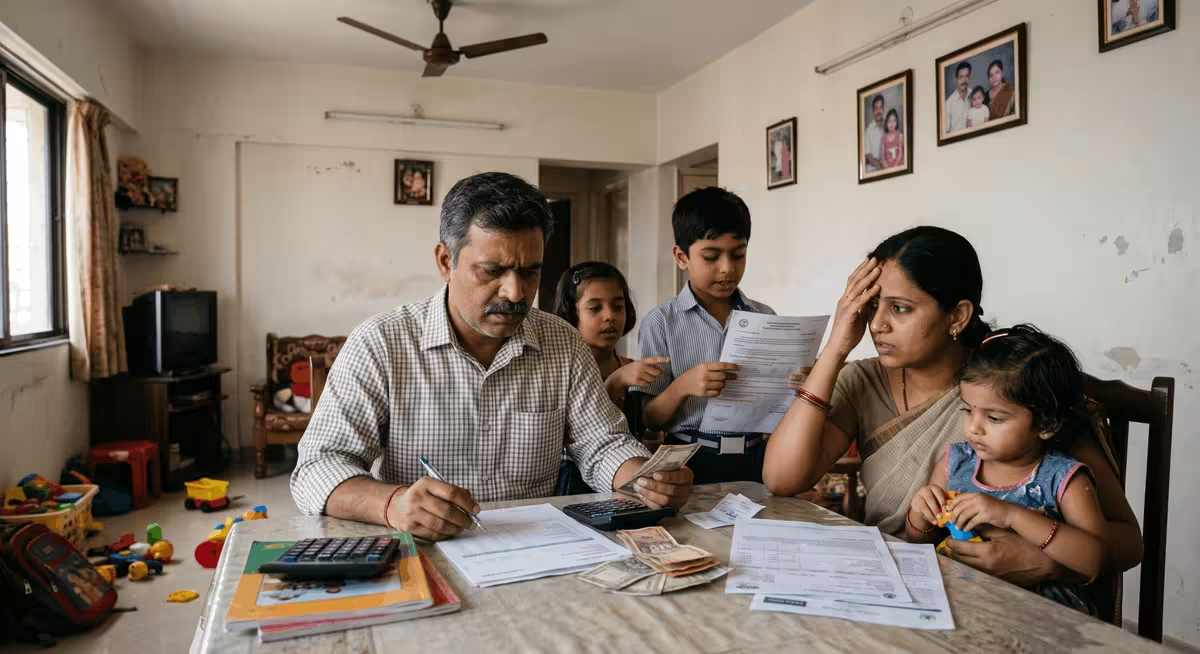
That does not mean having more than one child is a mistake. Nor does it mean that a child should ever be viewed merely as a financial burden. The point is much simpler: the number of children you choose to raise has a direct bearing on how much you need to earn, save, invest, and eventually accumulate for retirement.
If retiring with financial independence is one of your goals, family size deserves a place in your financial planning alongside income, savings, investments, debt, housing, and other major commitments.
The Cost of Raising a Child Is More Than the Money You Spend
The cost of raising a child is easy to underestimate because it does not arrive as one large bill. It accumulates gradually over many years.
You spend a little more on groceries. You need a larger home or another bedroom. School fees arrive every year. There are medical expenses, clothing, transportation, books, devices, extracurricular activities, vacations, celebrations, and eventually higher education. Some expenses are predictable; others appear without warning.
And the spending does not necessarily stop when a child reaches adulthood. Depending on the family’s circumstances and the child’s education and career path, parents may continue providing financial support for college, professional education, accommodation, transportation, or the transition into independent adulthood.
The exact amount varies enormously from one family and country to another. A family choosing public education and modest living expenses will spend very differently from one paying for private schools, expensive extracurricular activities, overseas education, or a higher-cost lifestyle.
That is why there is no single universal number for the cost of raising a child. What is universal is the principle: raising a child requires resources, and those resources are finite.
What Does the Cost of Raising a Child Include?
Think beyond the obvious expenses. A realistic estimate should consider at least the following:
- Food and nutrition: A growing child needs food, and the quantity and quality of that food change over time.
- Housing: A larger family may require additional living space, furniture, appliances, utilities, and maintenance.
- Health care: Prenatal care, childbirth, vaccinations, routine medical care, dental care, medicines, and unexpected medical expenses can all add up.
- Clothing and personal expenses: Children grow quickly, and their needs change as they grow older.
- Childcare: Working parents may need paid childcare, daycare, domestic help, or other forms of support.
- Education: Schooling can become one of the largest long-term expenses, particularly when private education, tutoring, higher education, or professional education is involved.
- Transportation: More family members can mean higher spending on public transportation, fuel, vehicles, or travel.
- Activities and experiences: Sports, music, hobbies, vacations, camps, books, technology, and other experiences can become significant expenses.
- Financial support in early adulthood: Some children require parental financial assistance even after reaching legal adulthood.
These categories are not exhaustive. More importantly, their proportions differ from family to family. An international cost study cannot tell you exactly what your child will cost you. It can only illustrate the many categories of expenditure that parents must eventually confront.
An Infographic Can Show the Scale, but Your Own Budget Matters More
There have been attempts to estimate the cost of raising children using large national datasets. One well-known example is the U.S. Department of Agriculture’s Expenditures on Children by Families study, whose latest published edition estimates child-rearing expenses from birth through age 17. The study is useful as an illustration of how broadly the costs of raising a child can be spread across a household budget, but its figures are specific to the United States and should not be treated as universal.
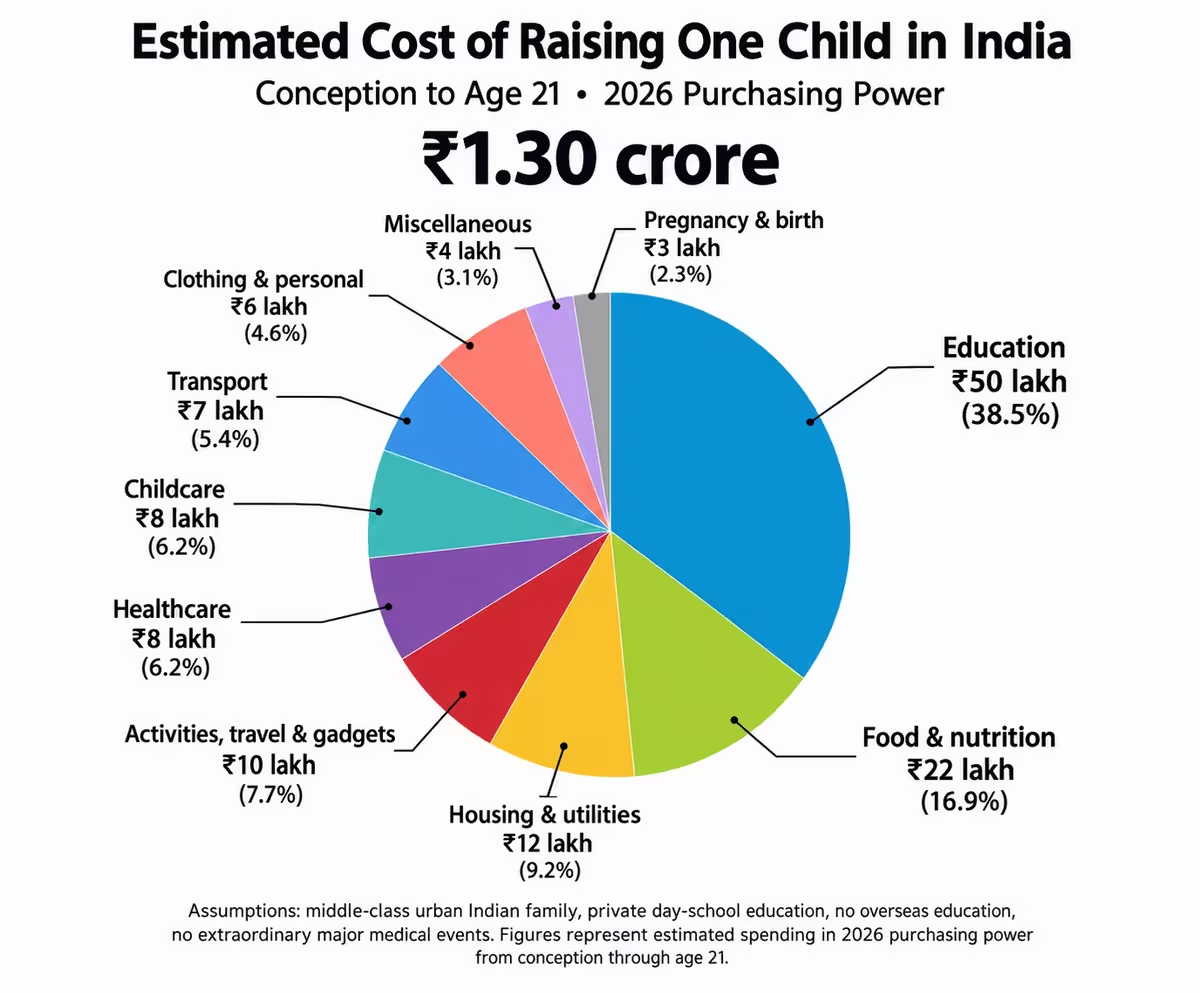
The usefulness of such an estimate is not that you should convert the figure into your own currency and assume it represents your future expenses. It is that it makes one point very clear: the cost of raising a child is spread across many parts of a family’s budget.
Your own calculation is therefore far more useful. Look at what you currently spend, identify what is likely to change when you have a child, estimate how those expenses could evolve as the child grows, and then account for inflation and major future expenses such as higher education.
Do not forget the expenses that are easy to overlook. Prenatal care and childbirth come before the child is even born. Education can extend well beyond school. A larger family may eventually require a larger house or vehicle. And a child’s needs can change substantially at different stages of life.
Most importantly, do not forget your own time.
Time Is Also a Cost
Money is not the only scarce resource in a family.
Children require attention, supervision, care, transportation, help with schoolwork, emotional support, and simply the time to be with them. Parents often spend years rearranging their working lives around their children’s needs.
That time has an economic value, even when you would never think of it that way while raising your children.
A parent may turn down overtime, postpone a career move, reduce working hours, take a career break, reject a transfer, or step away from paid employment altogether to care for children. The resulting loss is not recorded on a grocery bill or school invoice, but it can materially affect lifetime earnings, savings, investment contributions, and retirement wealth.
This is one reason the financial impact of having children can be considerably larger than the amount you can see by adding up their direct expenses.
Every Additional Child Changes the Financial Equation
It is tempting to think that the second or third child will cost very little more because many household expenses are already being incurred. The family already has a home, a kitchen, a vehicle, and many household appliances.
That is partly true. Some costs are shared. A family does not necessarily need a completely new house, refrigerator, or car for every additional child.
But shared costs do not make the additional child free.
Food increases. Clothing increases. Health care increases. Education increases. Transportation may increase. Activities increase. Space may eventually become inadequate. Childcare needs can increase. And the amount of time parents must devote to caregiving increases as well.
There can also be a compounding effect. If the first child receives a particular level of education, healthcare, activities, and opportunities, parents may want to provide a similar standard for the second and third child. In that sense, family size can influence not only the number of expenses, but also the scale at which those expenses are incurred.
The Retirement Opportunity Cost of a Larger Family
This is the part that matters most to an investor.
Suppose you have a certain amount of money available every month after paying for your essential expenses. You can direct part of it toward raising your children and part toward building your retirement portfolio.
If your family becomes larger, more of your income may naturally be directed toward current family expenses. That leaves less available for retirement savings.
And the cost is not limited to the amount you fail to save. You also lose the future compounding on that money.
A contribution made to a retirement portfolio in your 30s or 40s has decades to compound. Money spent on today’s expenses is gone once it is spent. Therefore, the financial opportunity cost of raising a larger family can extend far beyond the actual amount paid for food, education, housing, or healthcare.
This does not make spending on children “bad.” It simply means that families have to make trade-offs. You cannot spend the same rupee, dollar, euro, or pound twice.
Why Government Benefits Cannot Replace Personal Planning
Many countries provide some combination of child benefits, tax credits, subsidized education, healthcare, childcare support, parental benefits, or other forms of social protection for families. Such support can reduce the financial burden on parents, and evidence shows that well-designed social protection can improve children’s access to essential services and reduce child poverty.
These programs can be valuable. Public policy can reduce the financial burden on parents, and well-designed family benefits can make a meaningful difference to children’s well-being. UNICEF’s recent work on child poverty, for example, highlights the role that social protection and public services can play in improving children’s access to health, nutrition, education, and other essentials.
But government support should be treated as assistance, not as the foundation of your family’s financial plan.
Policies change. Eligibility changes. Benefits differ between countries and income groups. And even generous assistance cannot eliminate the cost of raising a child. Parents remain responsible for a substantial share of the financial and time commitment.
Therefore, the sensible approach is to make your family and retirement plans work without assuming that future government benefits will solve the problem.
Children Are Not a Retirement Plan
There is another idea worth reconsidering: having children so that they will financially support you in old age.
Children may certainly become a source of emotional and practical support as their parents grow older. But treating children as a retirement asset is neither a reliable financial strategy nor a fair expectation to place on them.
Your retirement should ideally be funded by your own savings, investments, pensions, and other assets accumulated during your working years.
In other words, raise children because you want to raise children, not because you expect them to finance your retirement.
Having More Than One Child Is a Personal Decision, Not a Financial Mistake
There is an important distinction here.
I am not arguing that everyone should have only one child. Nor am I suggesting that a larger family cannot be financially secure. Families have different incomes, values, priorities, support systems, and expectations for their children’s education and lifestyle.
A family with three children and a strong financial plan may be far more secure than a family with one child and uncontrolled spending.
The real question is not, “How many children should everyone have?” It is, “Can we comfortably support the family we want while still building the financial future we want?”
Plan Your Family and Your Retirement Together
If you want financial independence and a comfortable retirement, family planning and financial planning should not exist in separate worlds.
- Estimate the likely cost of raising each child.
- Account for inflation rather than using today’s expenses as your final estimate.
- Include education and other large future expenses.
- Consider childcare and the potential effect on both parents’ careers.
- Allow for higher housing, transportation, and household expenses as your family grows.
- Build an emergency fund large enough for the needs of your actual family.
- Continue investing for retirement even while paying for your children’s needs.
- Do not sacrifice your retirement entirely to fund expenses that could be handled through better planning, budgeting, or prioritization.
- Do not assume your children will eventually fund your retirement.
The objective is not to spend as little as possible on your children. The objective is to avoid making today’s family decisions at the expense of tomorrow’s financial independence.
The Bottom Line
Children are priceless in the emotional sense. But raising them is not costless in the financial sense.
Every child requires money, time, attention, and opportunities. The more children you choose to raise, the greater the resources your family will generally need. That does not make a larger family wrong. It simply means that your financial plan must be large enough to support it.
If retiring rich—or, more realistically, retiring financially independent—is one of your ambitions, do not look only at your salary and investment returns. Look at the size of the family you are planning to support, too.
Having children is a deeply personal decision. How many children to have is a personal decision, too. But once you make that decision, understanding the financial consequences is part of responsible planning.
After all, a comfortable retirement is not built from investment returns alone. It is also built from the financial decisions you make throughout your working life.
If people just stuck together and demanded an end to “globalism,” which is just a polite euphemism for the new feudalism, maybe the size of our families would become less of an issue when considering retirement. As it stands, unless “globalism” is defeated, very few people will ever be able to retire, let alone retire rich.
Yes Raj, I too believe in a concentrated portfolio in this aspect. LOL.