DHFL Lesson in NBFC Stocks: How to Lose Money in Share Market
Introduction
My Investment in DHFL: A Personal Case Study
In 2018, after successfully investing in Kellton Tech, my attention turned to Dewan Housing Finance Limited (DHFL). At that time, the company’s share price had dropped significantly from over ₹600 to around ₹200, making it appear as an attractive value buy. Adding to the confusion, DHFL’s bonds—which were once seen as safe—had also started tumbling in value as their yields spiked sharply during the IL&FS crisis. This turmoil in the debt market hinted at brewing risks beneath the surface.
Initially, this substantial decline seemed like collateral damage resulting from the broader IL&FS financial crisis, rather than a sign of DHFL’s internal distress. Consequently, many investors, including myself, perceived this as a buying opportunity rather than a red flag—overlooking how crashing bond prices were a warning for both debt and equity holders.
Why DHFL Seemed a Value Buy After IL&FS Fiasco
A quick review of DHFL’s financials revealed no glaring irregularities. Audited reports appeared robust, and respected advisers, such as the esteemed finance writer P V Subramanyam (subramoney.com), voiced the company’s balance sheet strength and stability. This professional endorsement further boosted my confidence. As a result, I purchased shares at an average price of ₹180, making DHFL a significant part of my portfolio while also holding stakes in Tech Mahindra and Kellton Tech. Despite the steady decline in DHFL’s share price thereafter, faith in the company’s fundamentals remained steady. The predominant belief was rooted in the idea that promoters with significant personal wealth trapped in the company would act prudently to protect their investment.
However, this assumption would ultimately prove dangerously naive.
Why Investors Trusted DHFL’s Balance Sheet
Despite the red flags, many investors clung to the belief that DHFL’s audited financials reflected a stable foundation. The numbers on paper appeared sound, with consistent earnings reported and no visible signs of asset quality deterioration. Moreover, as key analysts and market commentators, such as P V Subramanyam, publicly voiced about the company’s credibility, it acted as a reinforcement for that belief. This facade of strength reinforced the notion that the company was a viable turnaround candidate, and therefore, a worthwhile investment.
However, this confidence neglected the underlying reality of fund diversion and accounting manipulations that came to light later. For instance, forensic audits later revealed that promoters had siphoned off substantial amounts through related-party transactions, which were not immediately visible in routine financial disclosures.
Promoter Confidence and The illusion of Skin in the Game
Perhaps the strongest pillar supporting investor confidence was the large promoter holding in DHFL. It was widely believed that promoters with significant personal wealth invested in the company would do nothing wrong to run it aground. This belief in “skin in the game” created a false sense of security, leading many to ignore warning signs. Unfortunately, it became evident that promoter stakes do not necessarily safeguard minority shareholders from mismanagement.
Behind the scenes, DHFL was grappling with a classic but dangerous problem known as asset-liability mismatch. While DHFL’s housing loans were long-term, stretching over 15-20 years, it financed these by continually borrowing short-term through bonds, commercial papers, and loans due within months. This created a timing gap: the company relied heavily on rolling over short-term debt to meet its obligations while waiting years for loan repayments. When the IL&FS crisis hit, the sudden drying up of short-term funding markets exposed this imbalance, leading to a severe liquidity crunch. DHFL couldn’t refinance its debt on time, putting enormous stress on its finances and contributing directly to the collapse in both its bonds and shares.
The Fall from ₹600 to Near Zero
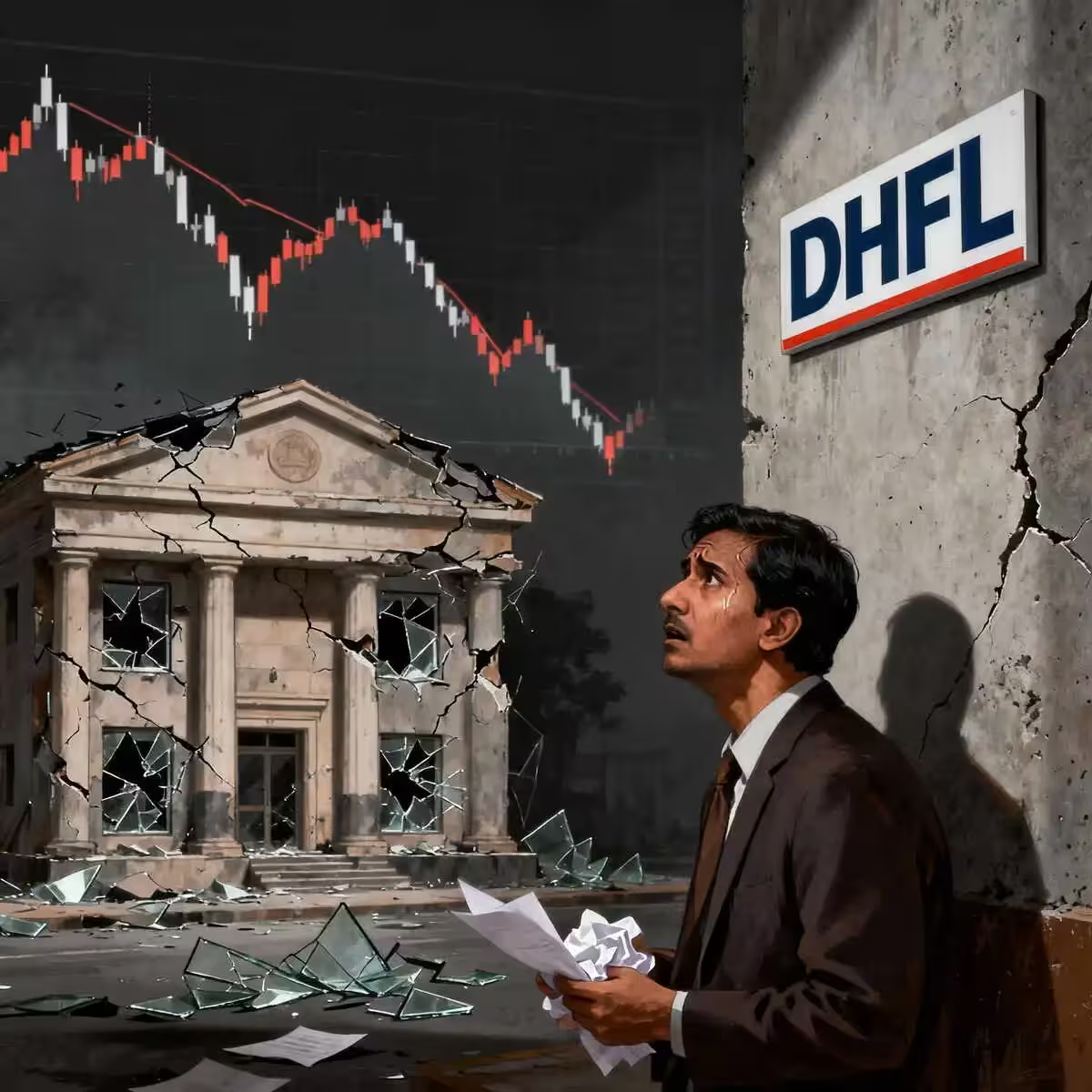
The collapse of DHFL was not an overnight event but rather a gradual and painful decline that began in 2018 and continued over the next two years. Initially, the company’s price dropped sharply from over ₹600 to less than ₹200, which many investors attributed to spillover effects from the IL&FS crisis. However, as months passed, the fall became more severe and was accompanied by mounting concerns over governance and financial controls.
By October 2019, DHFL’s stock plummeted below ₹20 as the company defaulted on several debt repayments. This episode sparked widespread panic and marked a turning point where investors realized the problem was far more serious than market rumors. In fact, the Reserve Bank of India (RBI) intervened by removing the board of directors in 2019, citing failures in governance and default on payment obligations. Subsequently, the board was replaced by an administrator appointed by the RBI, highlighting the severity of the crisis.
The ultimate chapter unfolded when the Piramal Group won approval from the National Company Law Tribunal (NCLT) in 2021 to acquire DHFL under a resolution plan. This plan involved writing off all existing equity, effectively wiping out shareholders. Creditors were offered partial recoveries, but investors suffered total losses. Attempts by DHFL’s promoters to bid and regain control were rejected, underlining the decisive end of the original entity.
This outcome starkly contrasted with earlier crises where swift rescues preserved shareholder value, exemplified by the Satyam scandal resolution or the Yes Bank bailout. Instead, DHFL’s saga serves as a cautionary tale of how unchecked risks and governance failures can decimate investor wealth completely.
Understanding the DHFL Collapse
Timeline of DHFL Collapse
The downfall of DHFL unfolded over several years, marked by recurring defaults, regulatory investigations, and legal battles. Understanding this timeline is critical to grasp the magnitude of the crisis.
Detailed Timeline of Key Events
- January 2019: Investigative media reports accused DHFL promoters of misappropriating funds through shell companies. DHFL publicly denied the allegations, but this triggered growing investor skepticism.
- February 2019: CEO Harshil Mehta resigned. Key credit rating agencies downgraded DHFL’s debt instruments, raising alarms about financial stability.
- June 2019: DHFL defaulted on multiple debt payments, including interest. This led to a massive 90%+ drop in share price and a surge in creditor panic. Telecom investor groups and banks began to urgently seek recovery plans.
- August 2019: Creditors drafted an Inter-Creditor Agreement attempting a coordinated approach to manage the crisis, while DHFL proposed full repayment promises that failed to regain confidence.
- Late 2019: Forensic audits revealed widespread financial irregularities including fake loan accounts and fund diversion to fictitious entities, exacerbating reputational damage and prompting enforcement agency probes.
- November 2019: RBI superseded DHFL’s board citing governance failures and default risks, appointing R. Subramaniakumar as administrator. RBI also initiated insolvency proceedings under the Insolvency and Bankruptcy Code (IBC).
- 2020: Multiple bids from financial investors including Piramal Group and others vied to acquire DHFL through resolution plans. Legal challenges arose over eligibility of promoter-led bids under new insolvency rules.
- June 2021: The NCLT approved the Piramal Group’s resolution plan, which wiped out existing equity holders but provided partial recovery for debt holders. The promoters were disqualified from the bidding process under Section 29A of the IBC.
- Post-2021: Piramal Group took over operations of DHFL as a non-deposit taking housing finance company. Regulatory revocation of DHFL’s deposit license aimed to stabilize the sector and protect future depositors.
This timeline illustrates how a seemingly strong NBFC unraveled due to governance failures, fraud, and funding crisis, culminating in a landmark insolvency resolution under Indian law.
Forensic Audit Revelations and Governance Lapses
KPMG and Grant Thornton Audits Expose Massive Fund Misuse
Subsequently, special forensic audits conducted by KPMG and Grant Thornton revealed disturbing truths beneath DHFL’s seemingly stable financials. For instance, KPMG’s audit uncovered that DHFL had disbursed loans worth over ₹24,000 crore to more than 60 connected entities (which the SEBI called “Bandra Book Entities”) with minimal or no operations. Furthermore, repayments totaling about ₹12,500 crore were untraceable, highlighting severe financial irregularities. These loans often lacked proper documentation, and the valuation of collateral was either missing or inadequate, increasing the risk profile substantially.
Moreover, the Grant Thornton forensic review revealed that DHFL had created nearly 260,000 fictitious home loan accounts. These were part of the government’s PMAY (Pradhan Mantri Awas Yojana) housing subsidy scheme, which was exploited to route funds illicitly for promoter gains. In effect, fake borrowers and imaginary entities were used systematically to siphon off funds, while the corresponding financial statements concealed these by using parallel ledgers known as the “Bandra Book Entities.”
Corporate Governance Failures and Auditor Shortcomings
In addition to fund diversion, the audits highlighted profound corporate governance breakdowns. For example, many of the shell companies had addresses identical to DHFL’s registered office, a glaring omission that should have triggered immediate alarms during loan approvals. However, internal controls failed to flag such irregularities, potentially due to promoter influence and complicity.
Equally troubling was the failure of auditors to detect and report these transactions. The audit committees appeared ineffective, and clean audit reports were issued without reservations, enabling the continuation of fraudulent practices. This lack of effective oversight allowed the promoters to continue manipulating financials and diverting funds over many years.
Legal and Regulatory Aftermath
As a consequence of these findings, the Enforcement Directorate filed cases for money laundering, forgery, and criminal conspiracy. Promoters faced arrest, and assets worth over ₹1,800 crore were seized. Additionally, the RBI initiated insolvency proceedings against DHFL in late 2019, culminating in the company’s eventual takeover by the Piramal Group in 2021.
Overall, the forensic audits played a pivotal role in uncovering the depth and scale of financial misgovernance at DHFL, demonstrating how corporate governance failures and lax regulatory oversight paved the way for one of India’s largest NBFC frauds.
Regulatory Response and Resolution Efforts
RBI Takes Control of DHFL Amid Governance Concerns
With the crisis deepening, the Reserve Bank of India (RBI) intervened decisively in November 2019. Specifically, RBI superseded DHFL’s board citing governance failures and appointed R Subramaniakumar, former managing director of Indian Overseas Bank, as the company’s administrator. This step was unprecedented, marking the first time the central bank took direct control of a non-banking financial company amid such turmoil. The intervention aimed to protect depositors’ interests, preserve company assets, and ensure an orderly debt resolution process.
Insolvency Proceedings Under the IBC
Shortly after superseding the board, RBI moved DHFL to the National Company Law Tribunal (NCLT) under Section 227 of the Insolvency and Bankruptcy Code (IBC) in November 2019. This legal move acknowledged DHFL’s failure to repay dues and the need for a structured resolution process. Subsequently, an interim moratorium was imposed, halting repayments to creditors and investors temporarily.
The Insolvency resolution committee was mandated to formulate a resolution plan within 180 days, with a possible one-year extension. Failure to do so would require lenders to set aside higher provisions against impaired assets, increasing pressure on all stakeholders. Given DHFL’s staggering total debt of around ₹85,000 crore, with bank exposure alone at ₹38,000 crore, this process was complex and closely watched by markets.
DHFL’s Deposit-Taking Status Revoked Post-Resolution Plan
Following approval of the resolution plan in early 2021, RBI revoked DHFL’s deposit-taking license, among the first financial service providers to lose this status under the Financial Service Providers (FSP) Rules. Consequently, DHFL was reclassified as a non-deposit taking housing finance company, handing over control and operations to the Piramal Group. This revocation was crucial to ensure the safety and confidence of the depositors and prevent further risks associated with accepting deposits.
Challenges and Belated Regulatory Action
It is worth noting that while RBI’s responses were eventually firm, critics argue that regulatory actions were somewhat reactive and delayed. After all, DHFL had continued to accept deposits and issue public debt even while credit rating agencies had downgraded its instruments and the company struggled with liquidity. Only after mounting defaults and governance revelations did regulators move decisively.
Moreover, the handover to RBI from the National Housing Bank (NHB) as the regulator for housing finance companies signified an important regulatory shift aimed at strengthening oversight in India’s vast shadow banking sector.
Preliminary Risks in Banking and NBFC Investments
High Debt-to-Equity Structure in NBFCs
Firstly, NBFCs generally operate with much higher leverage compared to typical companies. They borrow extensively from markets and banks to fund their lending operations while maintaining relatively low equity capital. Consequently, a minor deterioration in asset quality can lead to a rapid erosion of their net worth. For instance, in DHFL’s case, the leverage ratios were alarmingly high, making the company extremely vulnerable to any form of loan default or liquidity squeeze.
Moreover, in contrast to traditional banks, NBFCs do not have access to central bank refinancing or deposit insurance schemes, further exposing them to liquidity risks. Therefore, investors must carefully scrutinize the debt-to-equity ratios before committing capital.
Capital Adequacy Ratio Requirements by RBI
In addition, the Reserve Bank of India imposes stringent capital adequacy norms on NBFCs and banks to ensure they hold enough capital buffers against potential losses. The rule of thumb is that deposit-taking NBFCs need to maintain a minimum capital adequacy ratio of 15%. Failing to meet these requirements can result in regulatory penalties or restrictions on business expansion. Thus, capital adequacy remains a critical indicator of financial health.
How Small Mistakes Can Wipe Out Equity
Even seemingly small lapses, such as delayed repayments or isolated defaults, can snowball into significantly larger problems. Due to the leveraged nature of NBFCs, a 2-3% spike in non-performing assets (NPAs) can wipe out the entire equity capital, forcing emergency measures like equity dilution, asset sales, or regulatory intervention. It is important to remember that financial companies operate in a highly interconnected and fragile ecosystem, where negative feedback loops exacerbate risks rapidly.
Fund Diversion Risks in Management-Led Firms
Another critical risk pertains to companies where promoters or top management wield substantial control without effective checks and balances. In such cases, there arises the possibility of deliberate fund diversion through related-party transactions or shell companies. Unfortunately, DHFL’s collapse highlighted how widespread and destructive such malpractices can be. Investors must therefore pay close attention to corporate governance standards and director independence to mitigate these hidden risks.
The Key Risks to Watch in NBFCs and Banks
Asset-liability Mismatch (ALM) Risk
First and foremost, NBFCs and banks frequently face asset-liability mismatches. They tend to borrow heavily in the short term but lend primarily for long durations. Consequently, if short-term funding sources dry up or become more expensive, these institutions may struggle to meet immediate obligations. For instance, during liquidity crunches, refinancing short-term debt can become impossible, thereby creating severe liquidity stress. This ultimately risks walk-offs on liabilities and potential insolvency. Therefore, monitoring ALM is critical for assessing financial stability.
Credit Risk and Loan Book Concentration
Additionally, credit risk remains a paramount concern. NBFCs and banks often concentrate their loan books on particular sectors or borrower groups, leading to sectoral vulnerabilities. For example, heavy exposure to real estate or gold loans can disproportionately affect financial health during sector-specific downturns. Moreover, large non-performing assets (NPAs) reduce earnings and capital adequacy. Thus, diversification and stringent credit appraisal are key to risk mitigation.
Corporate Governance Failures
Moreover, poor governance practices pose profound risks. Weak boards, inadequate risk controls, and auditor lapses allow management to circumvent prudent policies. This often results in underreporting of NPAs, undisclosed related-party transactions, or misstatements of financials. Notably, the DHFL collapse illustrated how governance failures can hide accumulating risks until it is too late for stakeholders to react.
Regulatory and Compliance Lapses
Furthermore, compliance with evolving regulations is mandatory. Repeated regulatory breaches not only invite penalties but also damage reputation and investor confidence. For instance, delays in implementing RBI-mandated risk norms can lead to higher provisioning requirements and reduced operational flexibility. As such, adherence to regulatory frameworks is a major pillar of financial resilience.
Liquidity and Refinancing Risks
Liquidity risk can escalate rapidly during market disruptions. Financial firms that depend on continuous borrowing from markets become vulnerable when credit spreads widen or market access tightens abruptly. Without adequate liquidity buffers, sudden spikes in interest rates or economic shocks can trigger defaults, forcing distress sales of assets at depressed prices.
Interest Rate and Macroeconomic Sensitivity
Interest rate fluctuations heavily influence profitability. Rising rates increase borrowing costs, squeezing net interest margins. Simultaneously, economic slowdowns raise default probabilities as borrowers face income disruptions. Hence, macroeconomic cycles directly impact financial stability and need constant monitoring.
Fraud, Mismanagement, and Promoter Integrity Issues
Lastly, potential fraud and mismanagement remain constant threats. When promoters or management exercise unchecked powers, the risk of fund diversion or manipulation surges. The lack of transparency often prolongs detection, magnifying eventual losses for investors and creditors alike. Therefore, strong governance frameworks and independent oversight are indispensable safeguards.
Regulatory and Political Interference
Political Influence on Lending and Credit Decisions
Political actors sometimes pressure NBFCs and banks to lend to favored sectors, regions, or borrowers, irrespective of creditworthiness. This distorts prudent lending practices and can lead to the build-up of large non-performing assets, putting the institution’s financial health at risk.
Regulatory Delays and Inconsistent Enforcement
Regulators occasionally face pressures that delay or dilute enforcement actions against troubled financial institutions. Such delays may embolden risky management behavior, as consequences for malpractices appear uncertain or avoidable. Moreover, political considerations can impede swift regulatory decisions, fostering prolonged instability.
Challenges to Regulatory Independence
Effective supervision requires regulatory bodies to operate independently, free from external influence. However, government interference can undermine this autonomy, restricting timely interventions or corrective measures. Cases from India and other countries demonstrate how political pressures can weaken regulatory oversight, heightening systemic risks.
Judicial Interventions and Overlapping Jurisdictions
The financial regulatory landscape is sometimes complicated by judicial orders and overlapping jurisdictions, causing delays and uncertainty in enforcement. Such legal complexities can hinder decisive regulatory actions and impact financial institution governance.
Overreliance on Short-Term Borrowings
Many NBFCs and banks heavily depend on short-term borrowings to fund their operations, often through commercial papers and inter-bank loans. This overreliance creates major refinancing risks, as rolling over short-term debt depends on volatile market conditions. When liquidity dries up during financial stress or market panic, refinancing becomes costly or impossible. This forces distressed firms into emergency asset sales or defaults.
DHFL faced this exact risk: much of its borrowing was short-term, leaving it exposed to sudden funding shocks. In contrast, well-managed institutions balance maturity profiles and maintain liquidity buffers to withstand market disruptions. Hence, an excessive dependence on short-term funding remains a critical vulnerability.
Mixing Long-Term and Short-Term Borrowings
Furthermore, NBFCs and banks often fund long-term loans with short-term borrowings, creating a fundamental mismatch. While long-term loans generate income over many years, liabilities need to be repaid or refinanced frequently. This gap leads to systemic liquidity risk, especially if short-term market funding dries up. Consequently, an inability to roll over short-term borrowings can precipitate immediate solvency crises, even if the long-term loan assets remain intact.
This mismatch requires firms to continually access markets or banks for refinancing, exposing them to interest rate fluctuations and counterparty risk. In stressed conditions, market participants may demand higher rates, worsening financial strain. Therefore, effective asset-liability management and maintaining diversified funding sources are essential to mitigate such risks.
Hard Lessons for Investors from DHFL and Others
Balance Sheet Strength is Not always Truth
The DHFL collapse vividly demonstrated that audited balance sheets and reassuring financial statements can be misleading. The company manipulated accounts through inflated loan books, disguised bad loans, and diversion of funds to shell companies. For example, DHFL created over 260,000 fake loan accounts and funneled money to fictitious entities, making the financial health appear robust. Therefore, investors must look beyond surface numbers and seek to understand the quality of assets and the integrity of disclosures.
Promoter Wealth is No Safeguard
Investors often presumed that DHFL’s large promoter holdings meant the management had “skin in the game,” which would prevent reckless behavior. However, the promoters misused this trust by diverting funds to private entities and shell companies for personal gains. They acquired international properties and other assets, bypassing lender interests. Thus, even substantial promoter wealth is no guarantee against misgovernance or fraud.
Auditor Approval Can Fail Investors
Auditors play a critical oversight role but failed to detect DHFL’s elaborate fraud. Clean audit reports were issued despite the presence of fictitious transactions and opaque related-party dealings. This failure underscores that relying solely on auditor opinions without independent verification or skepticism can expose investors to hidden risks.
Market Price Decline is an Early Warning
DHFL’s stock price plummeted by more than 95% before the full extent of fraud became public. Despite this, many investors held on or even averaged down, ignoring the warning signs implicit in falling market prices. Price declines often reflect collective market intelligence, and dismissing them can lead to amplified losses.
Never Average Down Blindly in Financial Firms
The temptation to buy more shares when prices fall can be costly, especially in the financial sector where failures may wipe out entire investments. DHFL investors who kept increasing their stakes despite deteriorating fundamentals suffered the largest losses. This teaches the importance of strict exit disciplines and reassessing investment theses before adding to positions.
Diversification Across Sectors is Essential
Concentrated exposure to DHFL or the financial sector magnified investor losses. Diversification across unrelated sectors helps mitigate firm-specific or sectoral risks, reducing the impact of any single failure on overall portfolio performance.
Hope is Not a Strategy in Investing
Many investors relied on hopeful narratives about government intervention, promoter bailouts, or quick turnarounds that never materialized. DHFL’s collapse emphasizes that relying on hope rather than evidence-based decision-making and risk assessment can be financially devastating.
Other Notable Collapses in Indian Finance
The Indian financial landscape has seen several high-profile collapses aside from DHFL, which share critical lessons on governance, regulation, and investor risk. These collapses illustrate systemic vulnerabilities in sectors like NBFCs, cooperative banks, and infrastructure finance, underscoring the importance of vigilance and regulation.
IL&FS Crisis and Contagion to Others
The 2018 IL&FS crisis was a watershed moment for shadow banking in India. The Mumbai-based Infrastructure Leasing & Financial Services Ltd defaulted on payments totaling around ₹91,000 crore, triggering severe liquidity squeezes. A critical factor was its complex web of 169 subsidiaries and associates, which hid risks and inflated debt exposure. The fallout caused investor panic, plunging stock prices of other housing finance companies like DHFL and raising concerns of systemic contagion. IL&FS’ asset-liability mismatch and heavy reliance on short-term market borrowings to fund long-term projects amplified its fragility, serving as a prelude to the DHFL collapse.
Yes Bank Rescue vs. DHFL Collapse
The contrasting handling of Yes Bank’s crisis and DHFL’s collapse highlights differences in regulatory urgency and approaches. When Yes Bank faced a liquidity crisis in 2020, the RBI swiftly intervened with a reconstruction plan involving a consortium of banks and capital infusion. This proactive action helped stabilize the bank’s operations and preserve depositor confidence, although investors did suffer losses. Conversely, DHFL’s regulatory response was perceived as delayed and less decisive, allowing governance failures and fund diversion to persist, culminating in shareholder wipeout. This disparity points to the critical importance of timely regulatory intervention in financial distress.
Cooperative Banks and Depositor Losses
Cooperative banks in India have encountered repeated distress episodes, often due to mismanagement, regulatory laxity, and political interference. Instances like the Punjab and Maharashtra Cooperative (PMC) Bank crisis resulted in depositor losses and limited access to funds for years. Unlike large commercial banks, cooperative banks often have limited capital and higher vulnerability to insider fraud. These failures erode public trust and highlight the need for stronger governance, transparency, and regulatory oversight tailored for cooperative banking structures.
Learning from Satyam vs. DHFL Outcomes
The Satyam scandal of 2009 and the DHFL collapse share common themes of corporate fraud and auditor failure but diverge in resolution outcomes. Satyam’s fraud was uncovered early through whistleblowers and led to a swift rescue via acquisition by Tech Mahindra, preserving shareholder value to an extent and stabilizing operations. By contrast, DHFL’s fraud remained hidden longer, with governance failures continuing unchecked until insolvency. The liquidation process wiped out equity investors and underscored weaker systemic safeguards in the NBFC domain. Lessons highlight the critical role of early detection, whistleblower protection, and rapid regulatory remedies.
How to Protect Yourself from Such Risks
Understanding Regulatory Protections
India’s financial sector is supported by robust regulatory bodies including SEBI (Securities and Exchange Board of India), RBI (Reserve Bank of India), IRDAI (Insurance Regulatory and Development Authority), and PFRDA (Pension Fund Regulatory and Development Authority). These bodies collectively work to ensure transparency, investor protection, and financial stability across markets. SEBI, in particular, regulates stock markets, mutual funds, and investor intermediaries to promote a fair and efficient securities market.
Recently, SEBI has enhanced investor protections through tighter disclosure norms, mandatory risk warnings, stricter broker regulations, and establishment of Investor Protection Funds (IPF). IPF offers compensation to investors in case of defaults by brokers, providing an additional safety layer. Moreover, RBI’s capital adequacy and provisioning norms fortify banking and NBFC sectors, enhancing their resilience to shocks.
Due Diligence and Vigilance
Before investing, thorough due diligence on a firm’s financial health, governance quality, and management integrity is essential. Scrutinizing audit reports, related-party transactions, promoter holdings, and credit rating changes can reveal early warning signals. Paying heed to market signals like share price declines or rising yield spreads is crucial rather than dismissing such signs.
Furthermore, investor vigilance includes monitoring sector-wide developments, regulatory changes, and macroeconomic trends that can impact financial firms. Keeping abreast with credible news sources and regulatory releases empowers investors to make proactive decisions.
Diversification and Risk Allocation
Spreading investments across sectors, asset classes, and geographies helps reduce concentration risks. Given the complex interdependencies in financial markets, diversification cushions portfolios from shocks associated with individual company failures or sectoral downturns. Conservative allocation to high-risk instruments and periodic portfolio reviews are prudent strategies.
Using Professional Advice and Technology
Engaging certified financial advisors and leveraging investment analytics tools can improve investment choices. Advisors can provide insights into risk-return tradeoffs and portfolio construction aligned with individual risk appetite. Technology solutions enable real-time monitoring and risk assessments for more informed decision-making.
Active Portfolio Management and Exit Discipline
Staying actively engaged with portfolio performance and having clear exit strategies minimizes losses during downturns. Unlike indiscriminate averaging down, disciplined profit-taking and stop-loss mechanisms avoid deeper losses during distress periods. Learning from past collapses like DHFL encourages timely exit from weakening positions.
Key Ratios and Red Flags to Watch
Financial ratios such as capital adequacy, debt-to-equity, non-performing asset (NPA) ratios, and provisioning coverage are critical indicators of a firm’s health. In DHFL’s case, auditors and rating agencies flagged persistent shortfalls in capital adequacy—below regulatory minimums—as early as FY18 despite purportedly strong balance sheets. Red flags included large unsecured borrowings, increasing rollovers of short-term debt, and inconsistencies in loan documentation for loans aggregating over ₹20,000 crore.
Other warning signs were declining liquidity ratios, rising credit costs hidden by aggressive provisioning policies, irregular related-party transactions, and sudden changes in auditor opinions or qualifications. Investors should also watch market signals: sharp downgrades by rating agencies, rising yields on debt instruments, and steep share price declines often predate defaults.
Importance of Stress Testing Financials
Stress testing involves analyzing how an institution’s portfolio withstands adverse scenarios like economic slowdowns, rising interest rates, or sectoral shocks. Stress testing reveals vulnerabilities obscured by stable periods. Regrettably, DHFL’s disclosures lacked transparent stress testing or scenario analyses even as risky asset concentrations grew. This omission hindered early risk detection by regulators and investors. Comprehensive stress tests could have highlighted DHFL’s liquidity mismatches and asset quality erosion much earlier, enabling preemptive corrective action.
Reading Management Intent Beyond Numbers
Financial statements only tell part of the story. Equally important is deciphering management’s intent and transparency. DHFL’s promoters regularly reassured investors despite auditors’ reservations and troubling market signals. There was little disclosure of related-party dealings or promoter fund diversions until forensic audits exposed them. The pattern of repeated denials, obfuscations, and aggressive window dressing indicated management prioritizing short-term reputation over long-term stability. Investors should evaluate management’s track record, insider transactions, communication consistency, and willingness to address concerns transparently.
The Role of Regulators and Their Limitations
Regulators like RBI and SEBI play crucial roles in monitoring financial firms and protecting investors. However, DHFL’s case revealed limitations such as delayed supervisory interventions, inconsistent audits, limited enforcement against promoter-related fraud, and regulatory gaps in NBFCs compared to banks. While RBI superseded DHFL’s board eventually, the delays allowed fund diversion to continue. Strengthening regulator capacity, real-time disclosures, and empowered whistleblower frameworks is imperative to close these gaps and prevent future collapses.
Why Conservative Investors Should Avoid NBFCs
Due to high leverage, liquidity risks, governance concerns, and opaque accounting practices, NBFCs inherently possess more risk than traditional banking stocks or government-backed securities. The DHFL saga and subsequent collapses serve as cautionary tales for conservative investors. While NBFCs may offer higher yields, they require sophisticated due diligence, risk appetite, and active portfolio oversight. Conservative investors are generally safer in diversified banking stocks, government securities, or mutual funds with strong regulatory oversight and transparency.
Long-Term Perspective on Financial Stocks
Adopting a long-term perspective when investing in financial stocks, including banks and NBFCs, requires understanding structural differences, global contexts, and conditions under which they become attractive investments.
Difference Between Large Banks and Shadow Banks
Large banks in India are heavily regulated entities with access to central bank funding, deposit insurance, and strict capital adequacy and liquidity norms. They play critical roles in financial stability and monetary transmission. In contrast, shadow banks—primarily NBFCs in India—operate with lighter regulation, often dependent on short-term market borrowings and lacking access to central bank backstops.
While large banks tend to have conservative loan practices due to regulatory oversight, NBFCs cater to niche or underserved markets and often offer faster, tech-enabled services. However, this regulatory difference means shadow banks carry higher credit, liquidity, and operational risks. The interconnectedness of NBFCs and banks poses systemic risks as liquidity issues or failures in shadow banking can quickly ripple through the banking system.
Global Examples of Bank and NBFC Failures
Globally, financial crises such as the 2008 Lehman Brothers collapse and European bank failures reveal how both traditional banks and shadow banking entities can unravel under stress. Lehman’s holding company acted partly as a shadow bank, relying on short-term funding for long-term exposures, highlighting the key liquidity risk in shadow banking. Similarly, European crises exposed how regulatory arbitrage and weak supervision in shadow banking sectors lead to systemic vulnerabilities.
These global examples demonstrate that while banks have safety nets like deposit insurance and lender-of-last-resort facilities, shadow banks often do not. This underlines why failures in shadow banking can cause outsized shocks, warranting careful regulatory focus and investment caution.
When, If Ever, Financial Institutions Become Buy-Worthy
Financial institutions, both banks and NBFCs, become buy-worthy investments primarily when their balance sheets show strong capital buffers, stable asset quality, and transparent governance. Regulatory clarity and a proven crisis management framework also enhance investor confidence.
Long-term investors seek firms that manage ALM risks effectively, maintain conservative provisioning, diversify loan portfolios, and exhibit market leadership or niche competitive advantages. Moreover, post-crisis reforms or regulatory resolutions—such as recapitalizations or mergers—can create buying opportunities by restoring stability and growth prospects.
Technology adoption and digital transformation also contribute positively by improving operational efficiencies and credit underwritings, notably in NBFCs. However, the inherent risks require investors to remain vigilant, avoid speculative plays, and prefer firms with proven track records for risk management.
Conclusion
Why Banking and NBFC Investments are Not for Everyone
Banking and NBFC investments carry unique complexities and risks that can challenge even seasoned investors. Unlike other sectors, financial firms operate in highly regulated environments with intricate balance sheets, tight liquidity requirements, and exposure to economic cycles. The DHFL collapse underscored how governance lapses, market confidence erosion, and regulatory delays can rapidly devalue these investments. Therefore, such stocks and bonds are generally unsuitable for conservative investors or those unwilling to engage in rigorous due diligence and continuous monitoring. Higher returns often come with heightened risks, demanding informed decision-making, risk tolerance, and active management.
Where I Went Wrong: Holding On Too Long
In hindsight, one of my biggest mistakes was failing to cut my losses when the warning signs became clear. Even as DHFL’s fundamentals deteriorated and the asset-liability mismatch came to light, I held on—hoping the stock would recover, clinging to the belief that the fall was temporary. I mistook a value trap for a value opportunity. What I now realize is that conviction should be based on facts, not hope. When the facts changed, I should have changed my mind. If I had acted earlier, I could have preserved capital and avoided deeper losses. This experience taught me that the hardest part of investing isn’t analysis—it’s discipline.
The Lasting Impact of the DHFL Collapse on My Portfolio
The DHFL debacle resulted in significant capital loss, largely due to reliance on outdated assumptions of promoter prudence and superficial balance sheet assessments. It exposed vulnerabilities in my investment approach, particularly overconfidence in sector and stock-specific prospects without sufficient risk controls. As a result, a portfolio shift ensued towards diversified, well-regulated financial institutions and increased allocation to non-financial sectors. The experience also instilled a discipline of skepticism towards red flags, early exit strategies, and prioritizing liquidity and governance metrics. Ultimately, the collapse was a harsh but invaluable lesson in risk management and portfolio resilience.
Core Investing Lessons to Carry Forward
In the aftermath of DHFL and similar crises, several core investing principles stand out:
- Never judge financial health solely by headline numbers; dig deeper into cash flows, asset quality, and related-party dealings.
- Promoter equity does not guarantee management integrity or risk containment.
- Early warning signals such as downgrades, unusual transactions, and peer distress must be heeded promptly.
- Avoid averaging down blindly; instead, reassess fundamentals continuously.
- Diversify broadly to mitigate sector-specific shocks.
- Understand the regulatory landscape and its evolving impact on financial firms.
- Maintain exit discipline and be willing to cut losses decisively.
Applying these lessons can safeguard capital and reduce exposure to catastrophic losses, guiding investors towards more resilient and informed portfolio construction.
Read The Disclosure:
Wrote off completely.
This post is an open note evaluating my investment in Dewan Housing Finance Limited (DHFL) shares and capital loss later.
I owned the shares of the company for a few years and later wrote off the investment, as DHFL shares were delisted following Piramal’s acquisition, where the original shareholders of DHFL received zero recovery value under the IBC provisions. Obviously, my views may carry bias. I welcome opposing views to help me overcome my bias. If this post helps you educate yourself to research an owned stock, I will be more than happy.
Did You Read The Disclaimer?
Not a SEBI-Registered Research Analyst or Investment Adviser
I am not a SEBI-registered Research Analyst or Investment Adviser. Raj & Co is an independent educational and informational website. All articles, views, opinions, observations, analyses and other content published on this website are provided solely for general informational and educational purposes.
Nothing published on this website constitutes investment advice, financial advice, research advice, a research report, a recommendation, solicitation, offer, endorsement or invitation to buy, sell, subscribe to, hold or otherwise deal in any security, financial product or investment strategy. The content is not tailored to any individual’s financial circumstances, investment objectives, risk tolerance or other personal circumstances.
Any discussion of a company, security, market, investment strategy, price, valuation, historical performance or other investment-related matter is intended solely for educational discussion and should not be interpreted as a recommendation or prediction of future performance. References to particular securities or investments do not constitute recommendations to buy, sell, or hold them.
I may personally buy, sell, hold or change my views or positions in securities at any time. Such personal transactions or changes in views do not constitute recommendations to readers. Where I disclose such positions or changes, the disclosure may occur after a transaction has been executed and may not be immediate.
Investment in the securities market is subject to market risks. Past performance is not indicative of future results. Readers should conduct their own independent research and due diligence and consider their own financial circumstances, investment objectives and risk tolerance before making any investment decision. If personalized financial advice is required, consult a financial adviser or other professional appropriately registered with SEBI.
No representation or warranty is made regarding the accuracy, completeness, timeliness or reliability of any information published on this website, and no responsibility is accepted for any loss arising from reliance upon such information to the extent permitted by applicable law.
SEBI’s investor education initiatives emphasize informed investing, financial literacy, risk awareness, and disciplined long-term wealth creation.
E & O E.